
Start›Instrumente
Die Instrumente der Welt
Was ein Weltinstrument ist, wie man die Instrumente der Welt ordnet, und 71 davon aus 74 Orten, jedes mit einer Aufnahme einen Klick entfernt.
Was ist ein Weltinstrument?
Jedes Instrument kommt von irgendwoher. „Weltinstrument“ ist ein Etikett aus dem Plattenladen: Es meint die Instrumente, die nicht das Klavier, die Geigenfamilie, die Blaskapelle oder Gitarre, Schlagzeug und Keyboards des Pop sind. Auf dieser Seite bedeutet es etwas Schlichteres: ein Instrument, das ein Volk aus dem gebaut hat, was um es herum wuchs, und in dem es sich bis heute selbst hört.
Das Etikett sagt mehr darüber, wo der Hörer steht, als über das Instrument. Die Geige ist ein Volksinstrument von Norwegen bis Rajasthan; die Oud wird in Bagdad seit zwölfhundert Jahren gespielt und ist dort niemandes exotischer Import. Was die Instrumente auf dieser Seite teilen, ist nicht Fremdheit, sondern Material. Ein Kürbis, ein Baumstamm, ein Stück Bambus, eine Ziegenhaut, ein von Termiten ausgehöhlter Ast, Pferdehaar, ein Ölfass: Ein Instrument ist das Material eines Ortes, das zum Sprechen gebracht wird, und seine Stimmung ist die Vorstellung dieses Ortes davon, was richtig klingt. Viele haben gar keine festen Tonhöhen, und genau das lässt sie die Töne zwischen den Klaviertasten spielen, die ein Maqam oder ein Raga braucht.
Sie reisen, und das haben sie immer getan. Die Oud zog mit den Mauren nach Westen und wurde zur Laute und dann zur Gitarre. Das persische Santur zog nach Norden und wurde zum ungarischen Cimbalom, und seine geschlagenen Saiten sind die Idee im Inneren des Klaviers. Die Ngoni überquerte in den Sklavenschiffen den Atlantik und wurde zum Banjo. Die chinesische Sheng zog die Seidenstraße entlang nach Westen und schenkte Europa die Mundharmonika und das Akkordeon. Ein Stammbaum der Instrumente ist eine Karte davon, wer wem begegnet ist.
Musikwissenschaftler ordnen Instrumente nicht nach ihrem Aussehen, sondern danach, was schwingt. Das System, 1914 von Erich von Hornbostel und Curt Sachs entworfen, hat vier große Familien: Saiten, Bläser, Trommeln und die Idiophone, Instrumente, deren eigener Körper der klingende Teil ist. Eine fünfte, die Elektrophone, kam später hinzu. Diese vier Familien ordnen das Regal unten. Jedes Instrument verweist auf die Orte, zu denen es gehört, und auf eine Aufnahme, denn eine Beschreibung ist nur die Hälfte.
Die vier Familien
Geordnet danach, was schwingt. Wählen Sie eine Familie, um zu ihren Instrumenten zu springen.
Chordophone
Saiten
Eine gespannte Saite schwingt; ein Korpus aus Holz, Kürbis oder Haut macht sie laut.
Gezupft, gestrichen oder geschlagen. Die ältesten sind Musikbögen und Harfen; die Lautenfamilie ist weiter gereist als jedes andere Instrument, von der Oud bis zur Gitarre, und die meisten Fiedeln der Welt sind Cousinen.
Kora · Oud · Sitar · Guqin · Koto · Morin khuur · Charango · Kamancheh · Balalaika · Nyckelharpa · Hardingfele · Valiha · Shamisen · Pipa · Erhu · Saz · Sarangi · Ngoni · Krar · Bandura · Cimbalom · Santur · Kanun · Dombra · Đàn bầu · Berimbau · Kantele
Aerophone
Bläser
Eine Luftsäule schwingt, in Bewegung gesetzt von den Lippen, einem Rohrblatt oder einer Kante.
Flöten, Rohrblätter, Hörner und die durchschlagenden Zungen in Dudelsäcken und Mundorgeln. Viele sind die lautesten Instrumente, die ein Dorf besitzt, gebaut, um im Freien über einen Platz, ein Feld oder ein Tal hinweg gehört zu werden.
Didgeridoo · Shakuhachi · Ney · Duduk · Uilleann pipes · Zurna · Khaen · Sheng · Siku · Alphorn · Kaval · Dizi · Gaita · Launeddas · Bansuri · Trembita · Mizmar
Membranophone
Trommeln
Eine gespannte Haut schwingt über einem hohlen Körper.
Handtrommeln, Stocktrommeln, Rahmentrommeln, Topftrommeln und sprechende Trommeln. Trommeln halten den Takt, aber auf einem großen Teil der Karte sprechen sie auch: auf die Tonhöhen einer Sprache gestimmt, kann eine Trommel Worte tragen.
Tabla · Djembe · Taiko · Darbuka · Bodhrán · Dhol · Daf · Sabar · Batá · Kundu · Tapan · Doira · Madal
Idiophone
Idiophone
Der Körper des Instruments selbst schwingt: geschlagen, geschüttelt, gezupft oder gerieben.
Glocken, Gongs, Xylophone, Rasseln, Daumenklaviere und das ganze Gamelan. Das ist die Familie, die das europäische Orchester beinahe vergessen hat und auf der ein großer Teil Afrikas, Südostasiens und der Karibik seine Musik aufgebaut hat.
Gamelan · Mbira · Steelpan · Balafon · Marimba · Angklung · Gyil · Timbila · Slit drum · Clapsticks · Khomus · Likembe · Kulintang · Ranat
71 Instrumente
Ein Regal, kein Katalog: genug von jeder Familie, dass der größte Teil der Karte vertreten ist. Jedes verweist auf die Orte, zu denen es gehört, auf alles, was auf der Seite damit verschlagwortet ist, und auf eine Suche nach einer guten Aufnahme. Um eine hinzuzufügen, ergänzen Sie einen Eintrag in worldmusic/instruments.py.
Saiten
Chordophone 27 Instrumente-
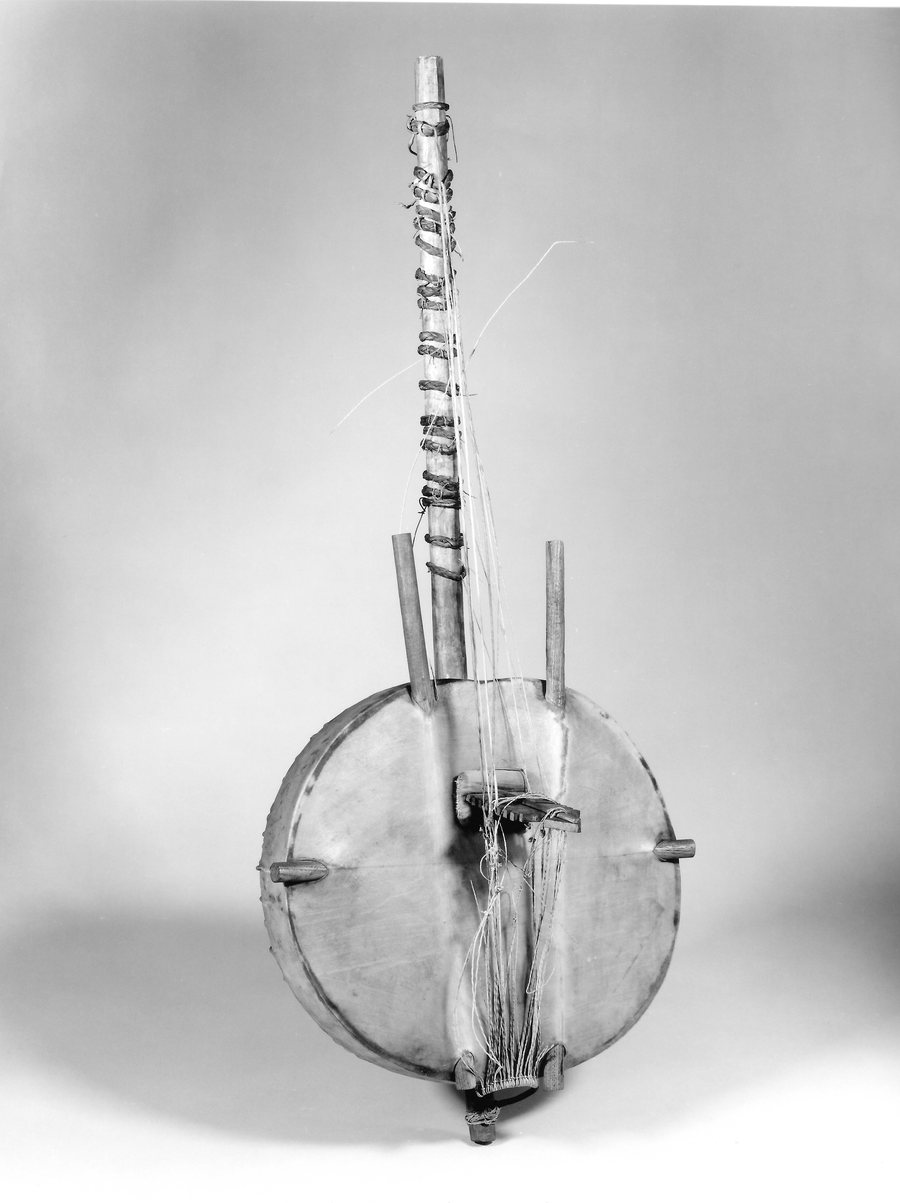
The Metropolitan Museum of Art · CC0 A 21-string harp-lute built on a halved calabash with a cowhide face and a tall hardwood neck. The player plucks with thumb and forefinger of each hand, so a single musician carries bass, chords and a rippling melody at once. It is the instrument of the Mande griots, and the Diabaté and Kouyaté families have played it for seven centuries.
-
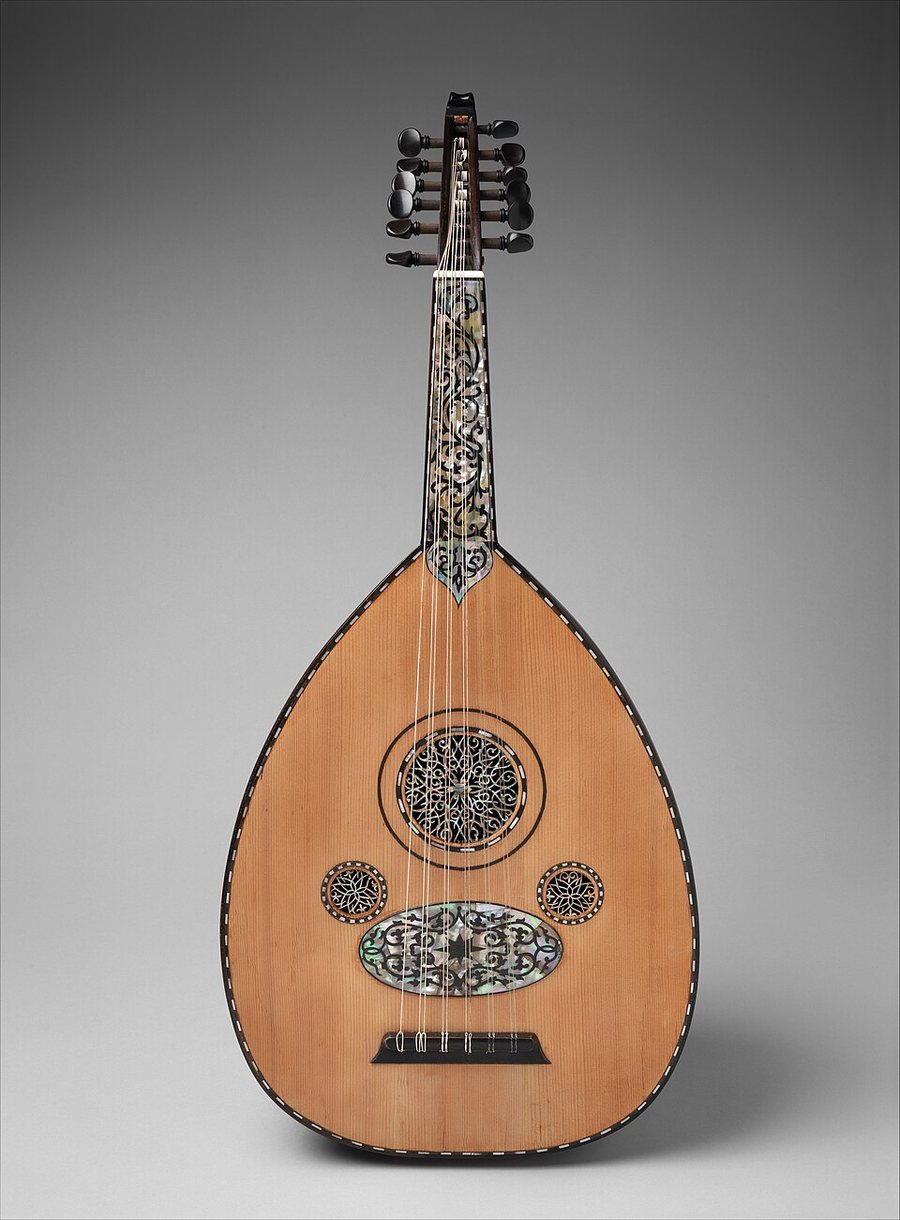
Manol (Emmanuel Venios) · CC0 A short-necked, fretless lute with a deep pear-shaped back and eleven strings in courses. Fretless, it can play the quarter-tones of the maqam. It is the central instrument of Arab, Turkish and Persian classical music, and the direct ancestor of the European lute, whose name is simply al-'ud.
-
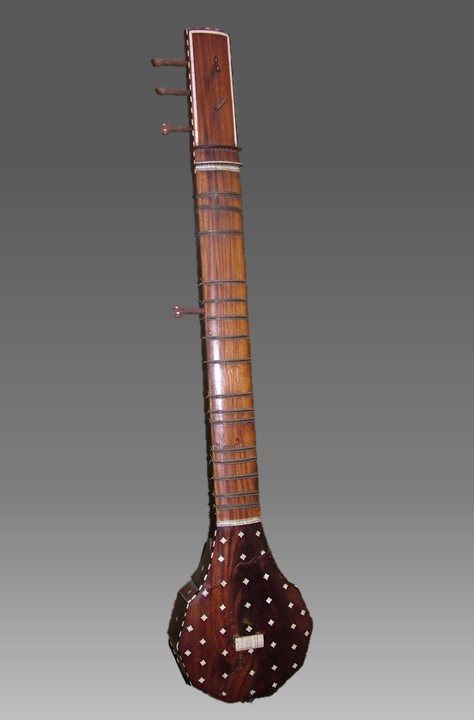
The Metropolitan Museum of Art · CC0 Sitar
The long-necked lute of Hindustani classical music, with a gourd body, movable arched frets, and a second set of strings beneath the frets that is never touched but rings in sympathy. That halo of resonance, and the long sliding bends on the main string, are its sound.
-
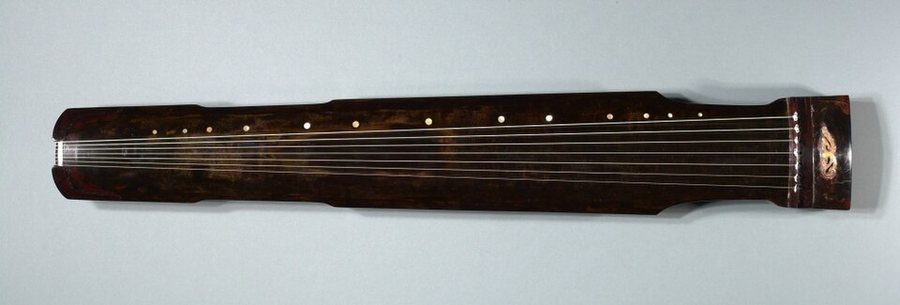
CharlieHuang · CC BY-SA 3.0 Guqin
A seven-string zither over a metre long, played flat on a table, with no frets and no bridges, only thirteen inlaid dots marking the harmonics. It is quiet, meant for a room of a few friends, and has three thousand years of written repertoire. Confucius is said to have played it.
-
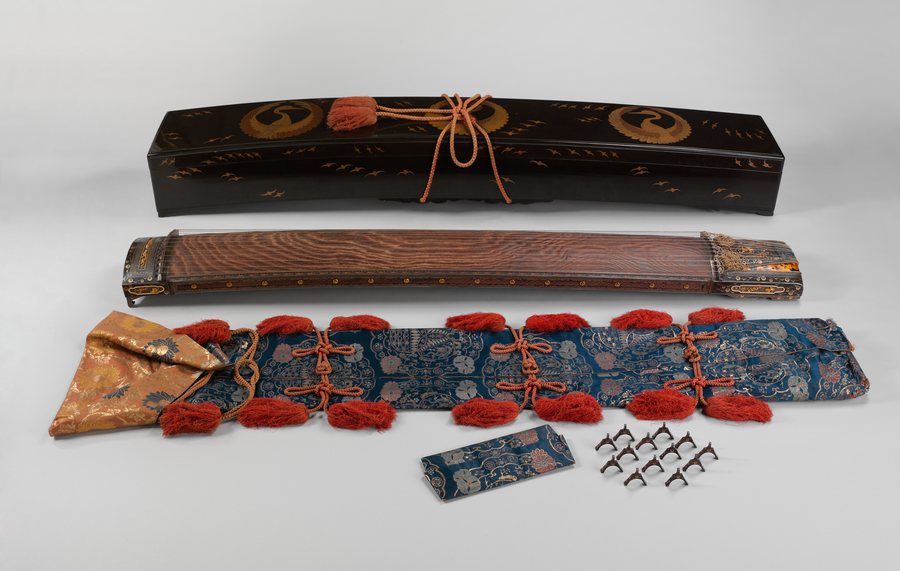
Metalwork by Goto Teijo, 9th generation… · CC0 Koto
A thirteen-string zither nearly two metres long, each string with its own movable bridge. The right hand plucks with ivory picks; the left presses the strings behind the bridges to bend and colour the notes. It came from China in the eighth century and became the sound of the Japanese court.
-
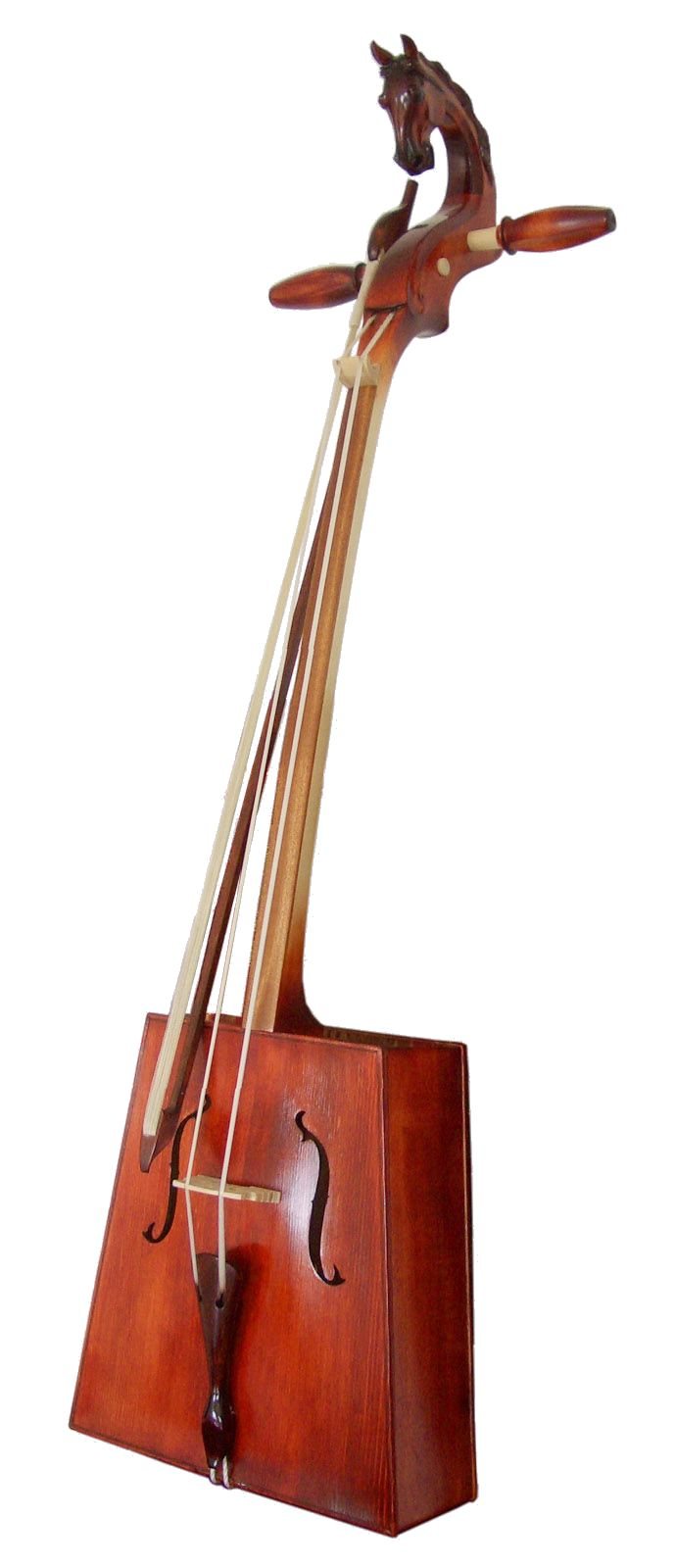
Mizu_Basyo · CC BY-SA 3.0 Morin khuur
The horse-head fiddle: two strings of horsehair over a trapezoid box, with a carved horse where the scroll would be. It is bowed with the strings not pressed to the neck but touched from the side with the fingernails, and it imitates everything a horse does. Every Mongolian household is supposed to own one.
-
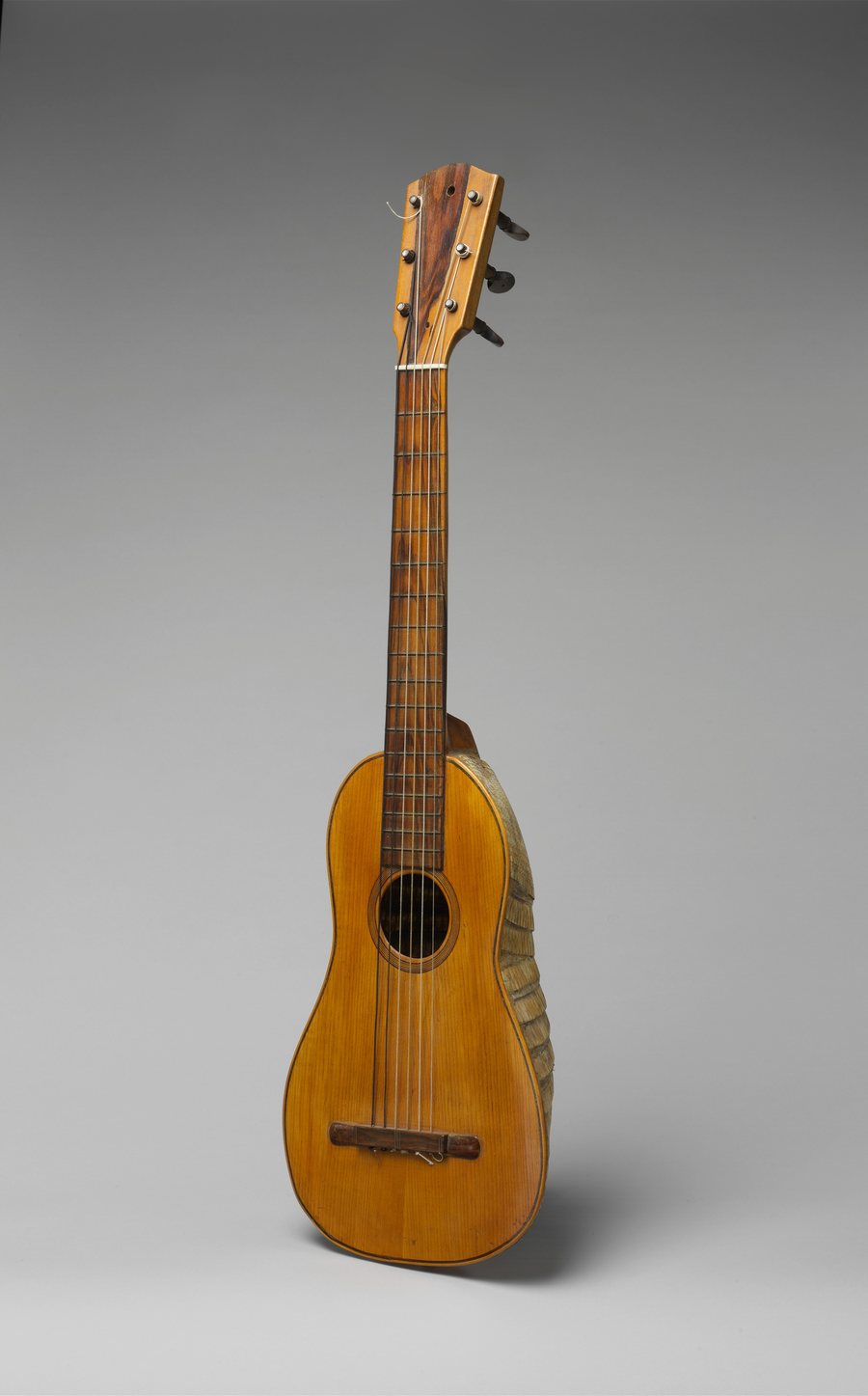
Marcos Manufactory · CC0 A tiny ten-string guitar from the Andes, once built on the shell of an armadillo and now of carved wood. Its courses are tuned in a bright, reentrant pattern, so strummed fast it shimmers rather than booms. It came from Spanish vihuelas and grew up in Potosí.
-
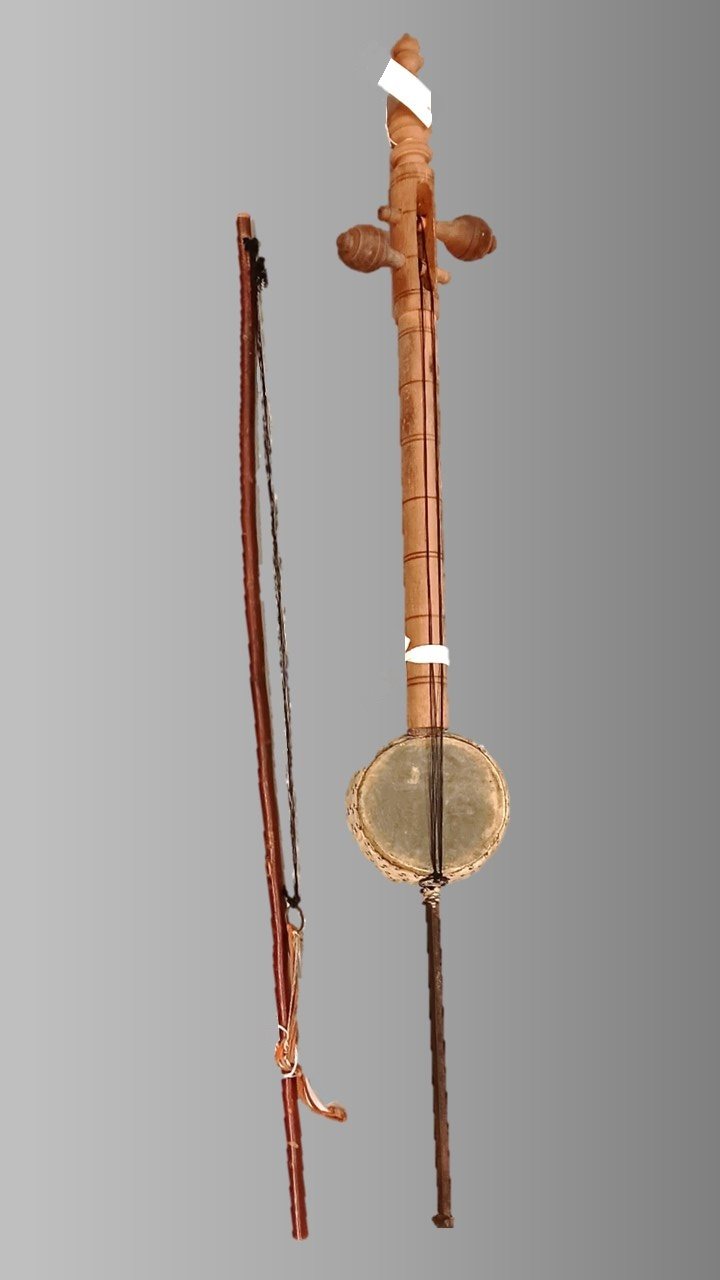
The Metropolitan Museum of Art · CC0 Kamancheh
A spike fiddle: a small round body on a long spike that rests on the knee, and the player turns the instrument to meet the bow rather than the bow to meet the string. Its tone is thin and keening, and in Persian and Azerbaijani music it stands in for the human voice.
-
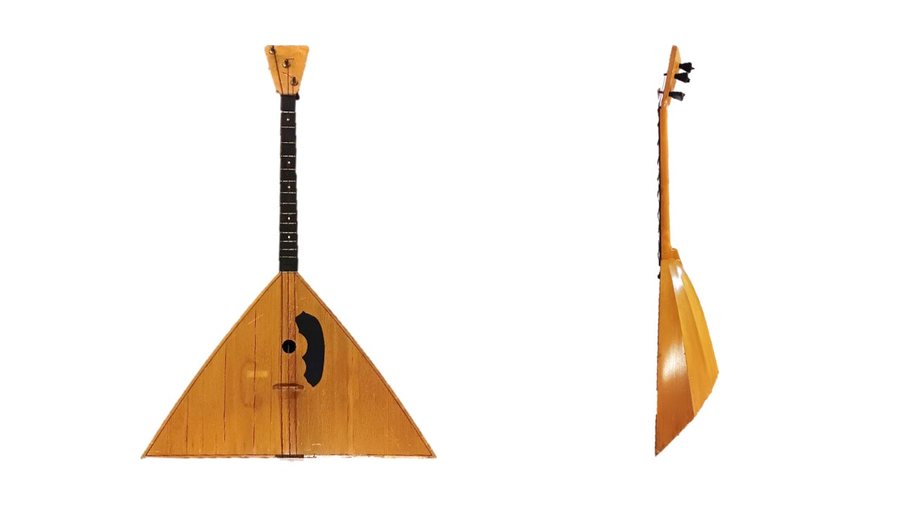
The Metropolitan Museum of Art · CC0 Balalaika
A three-string lute with a triangular body, strummed and tremoloed with the forefinger. It was a peasant instrument until the 1880s, when Vasily Andreyev standardised it in six sizes and built orchestras of them, which is why there is a double-bass balalaika as tall as its player.
-
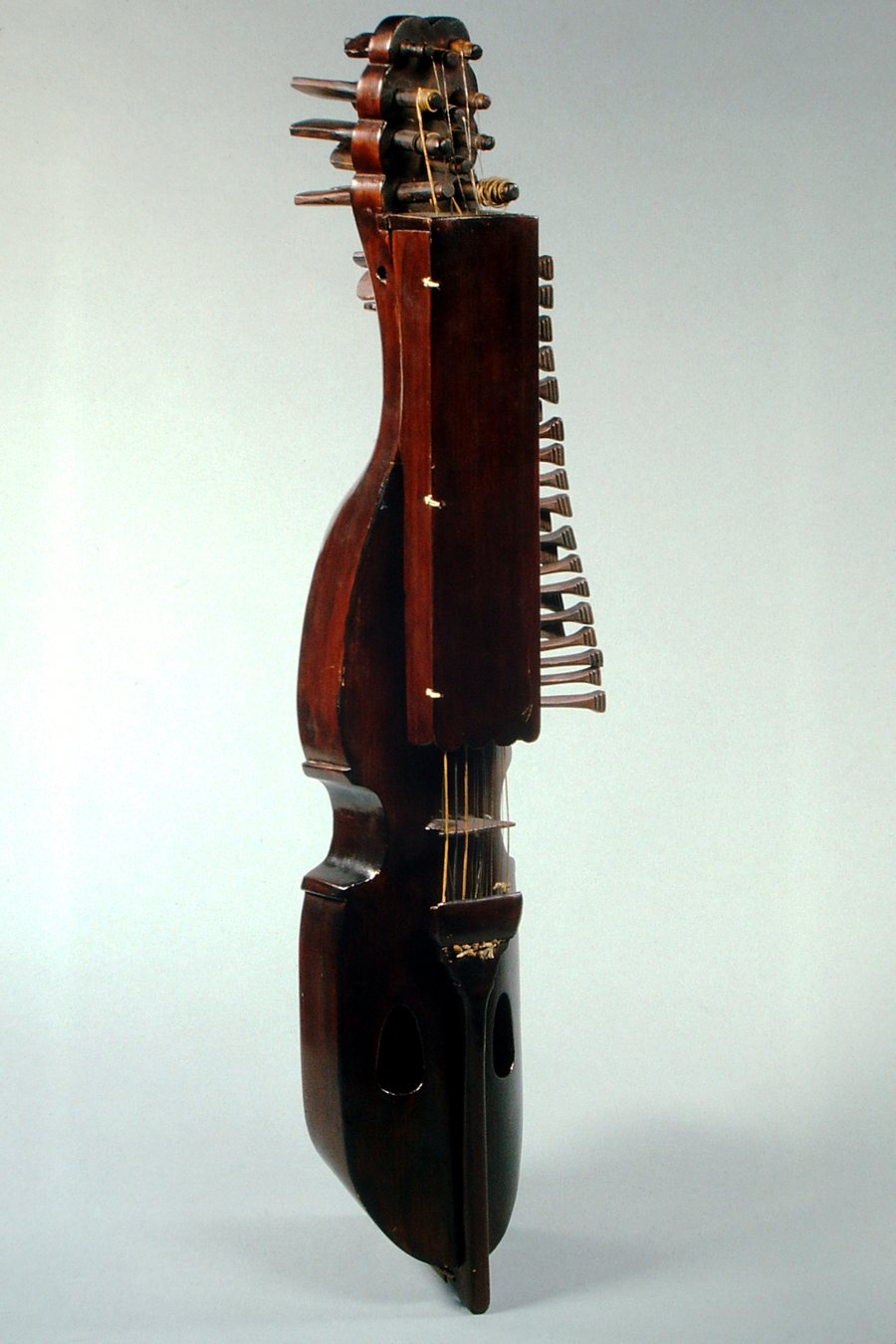
The Metropolitan Museum of Art · CC0 Nyckelharpa
A keyed fiddle: a row of wooden keys slides tangents against the strings to stop them, while a short bow plays, and a dozen sympathetic strings ring underneath. It appears in a church carving from 1350 and nearly died out, surviving in one province, Uppland, until the folk revival.
-
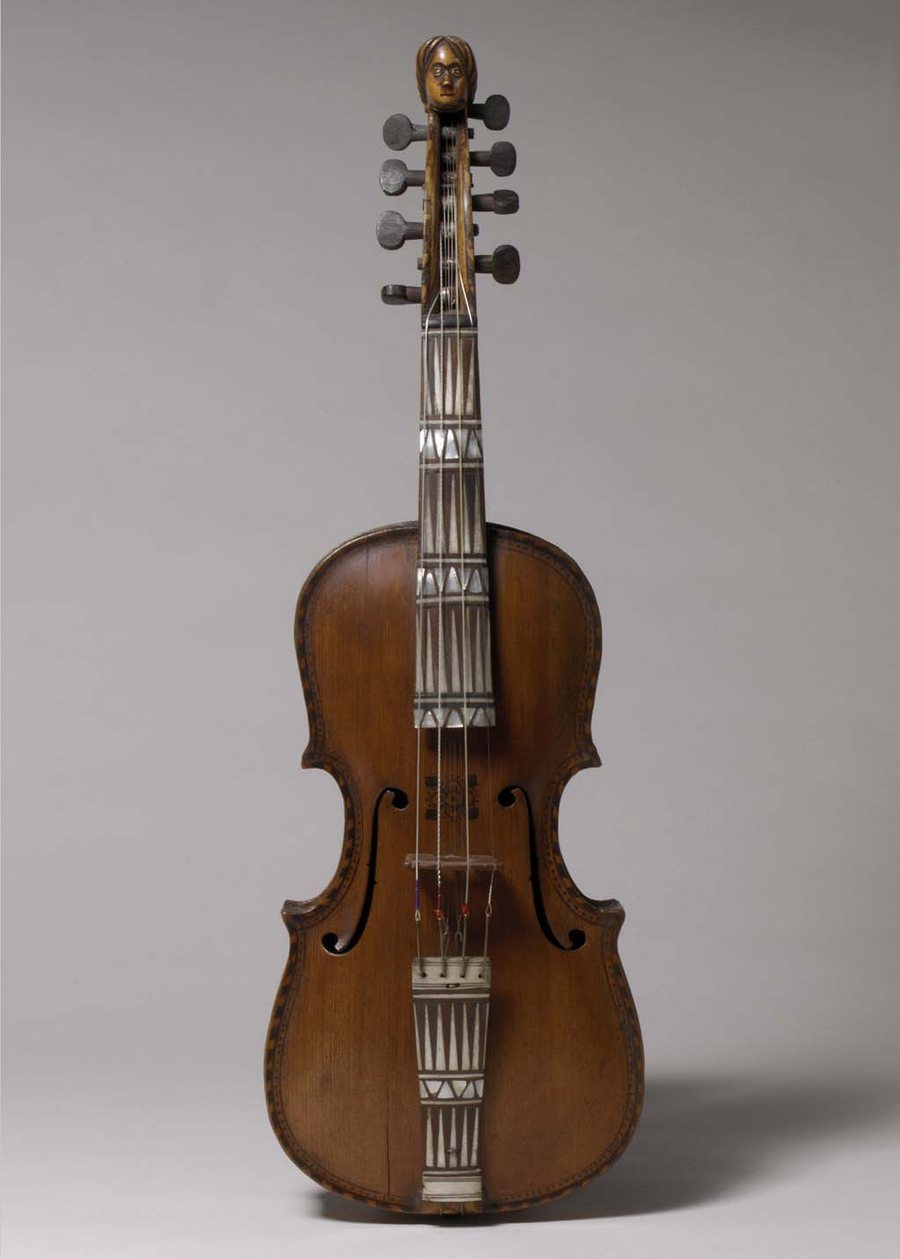
Isak Nielsen (Skaar) Botnen · CC0 Hardingfele
The Hardanger fiddle: a violin with a flatter bridge, four or five sympathetic strings under the fingerboard, and a body inked with black rosemaling. Its dance tunes run in asymmetrical threes, and the drone of the understrings gives it a sound no violin has.
-
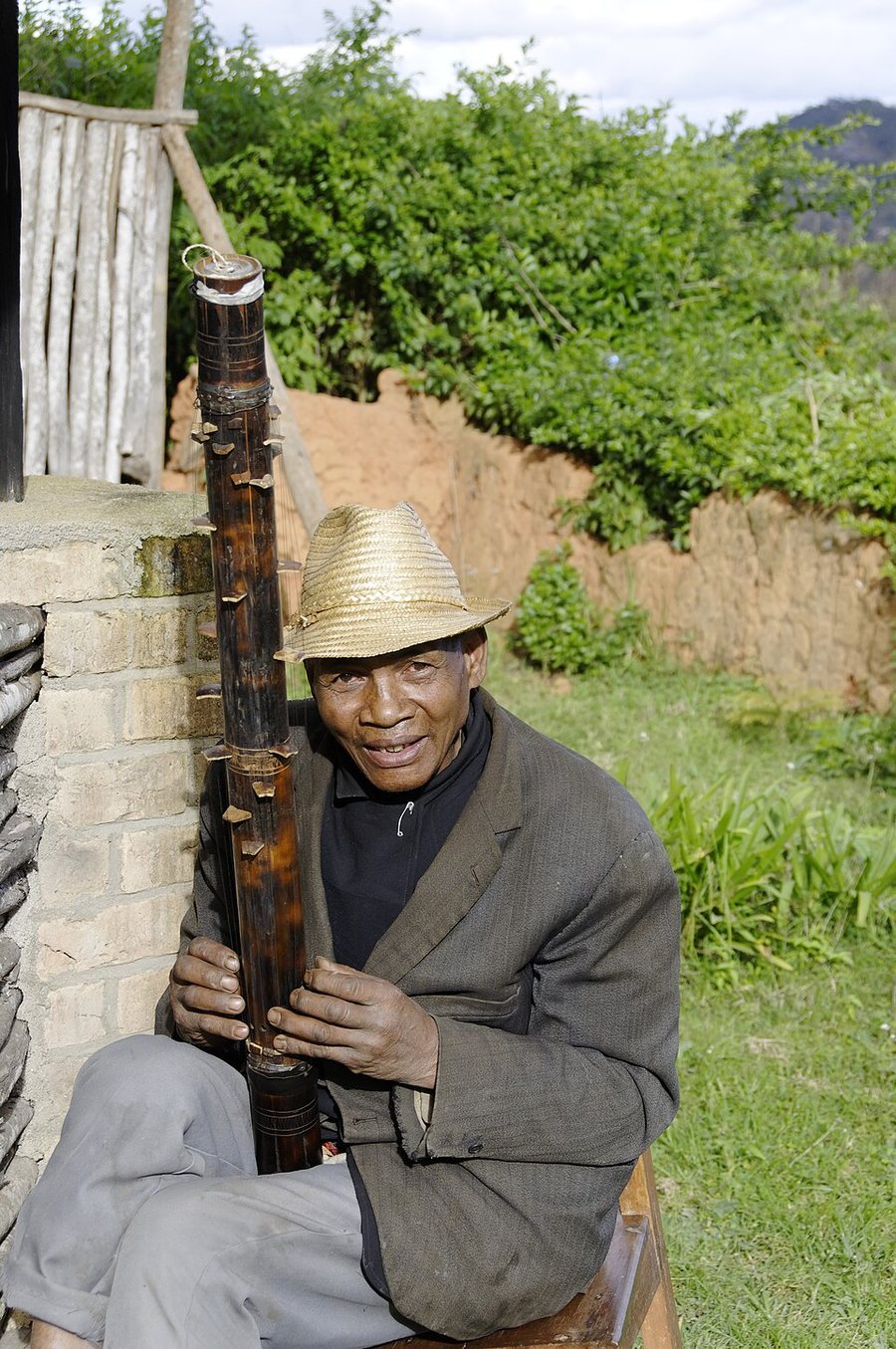
Rob Hooft · CC BY-SA 3.0 Valiha
A tube zither: strings run the length of a thick bamboo stalk, raised on small bridges, and the player holds it upright and plucks all the way round it. Once it was strung with strips of the bamboo's own skin; now with bicycle brake cable. It is the national instrument of Madagascar.
-
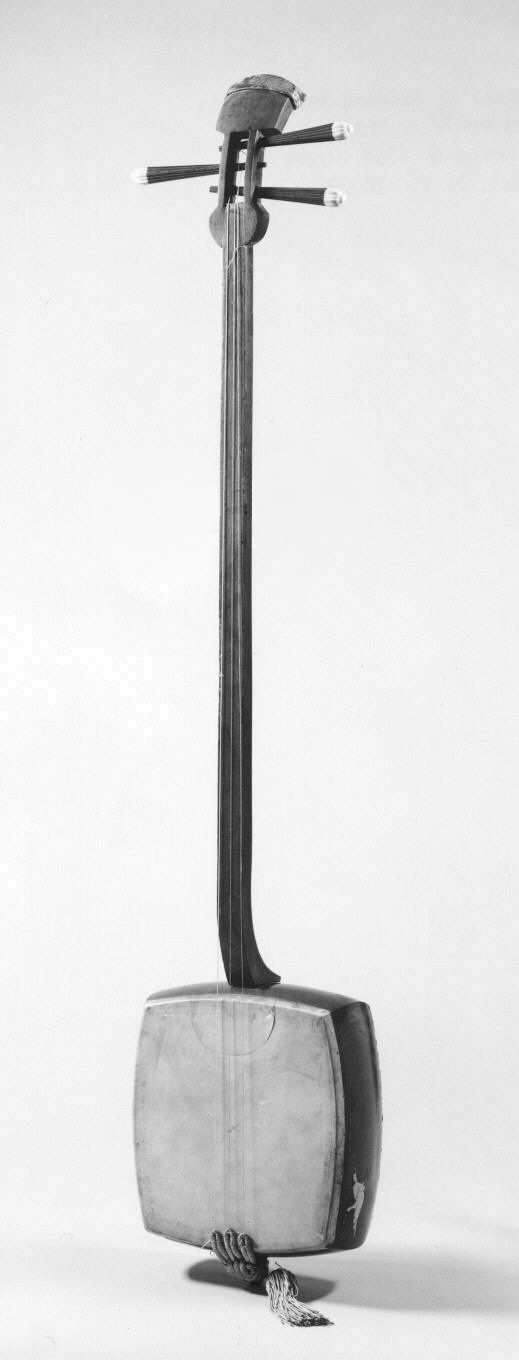
The Metropolitan Museum of Art · CC0 Shamisen
A three-string lute with a square body of cat or dog skin and a long slender neck, struck with a large plectrum shaped like a ginkgo leaf. The bottom string buzzes against the neck on purpose. The percussive Tsugaru style from the north is the one that fills concert halls.
-
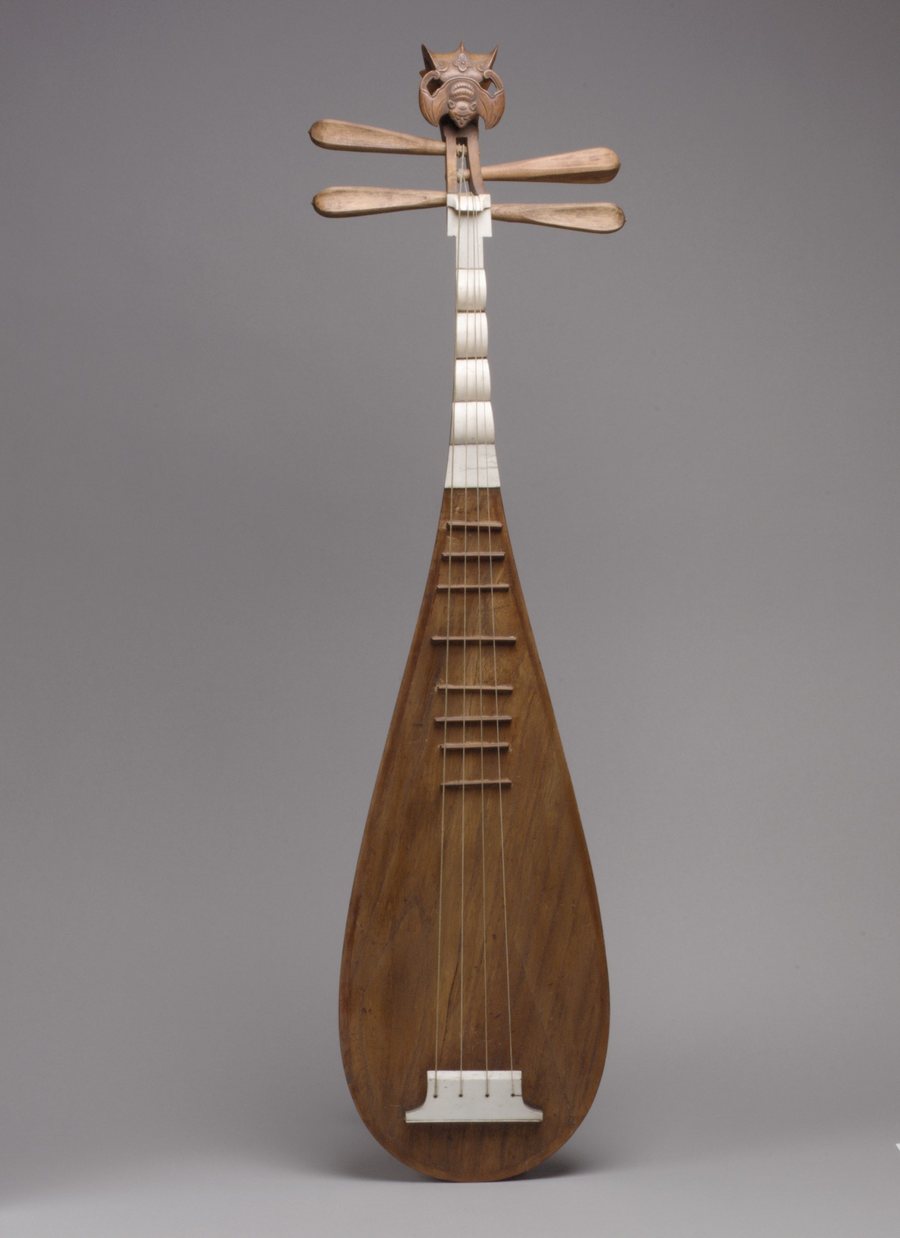
Jiu-cheng · CC0 Pipa
A pear-shaped lute held upright, with four strings and a steep ladder of frets up the neck. Players wear five false fingernails and tremolo so fast the sound becomes a sheet. Its showpiece, Ambush from Ten Sides, recreates a battle of 202 BC with drum rolls, shouting and swords, all on four strings.
-
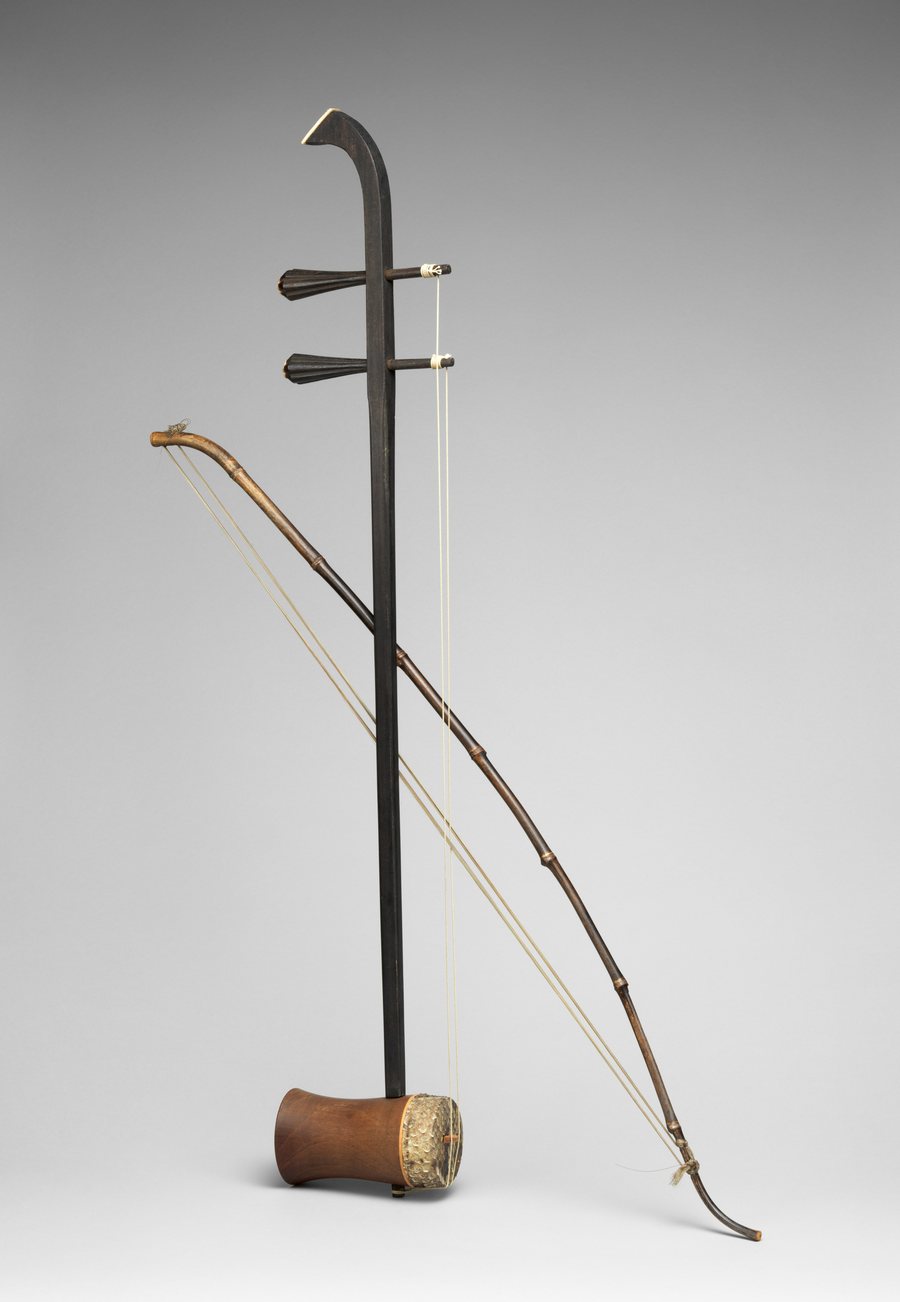
The Metropolitan Museum of Art · CC0 A two-string fiddle with a small hexagonal body faced with python skin, and the bow hair threaded permanently between the two strings. There is no fingerboard: the strings are pressed in the air. It sings in the register of a human voice and leads the modern Chinese orchestra.
-
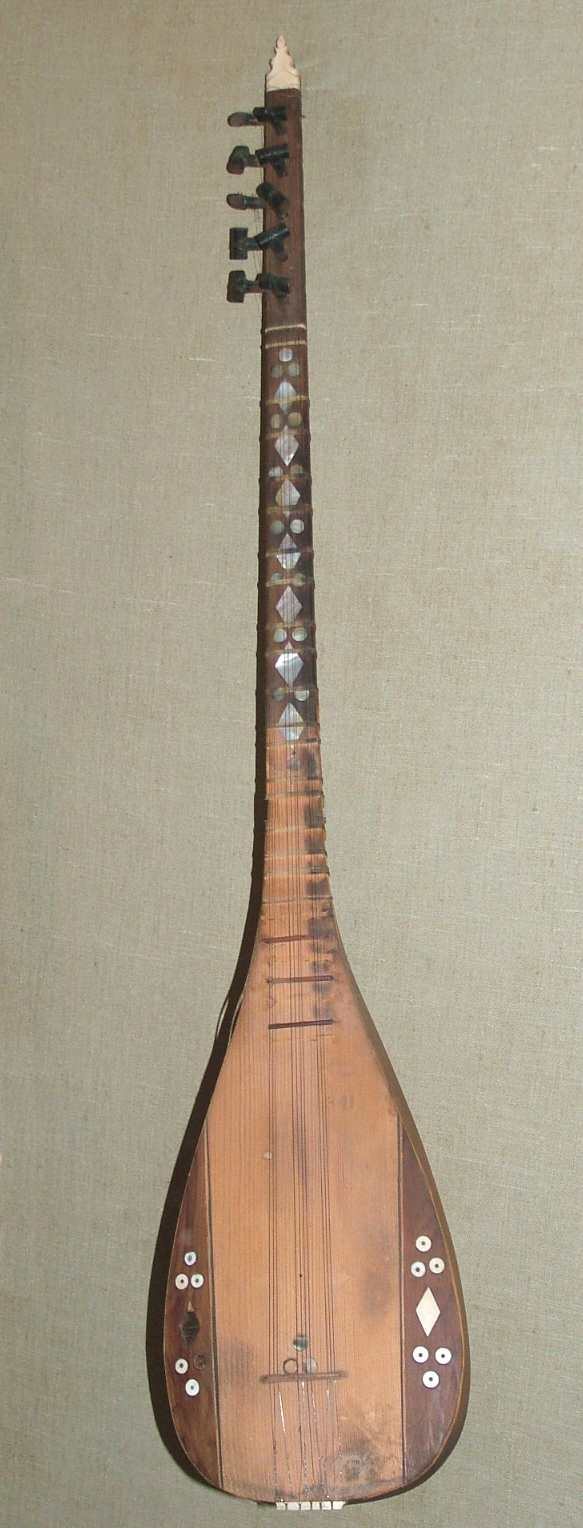
The Metropolitan Museum of Art · CC0 Saz
The long-necked lute of Anatolia, also called bağlama, with tied movable frets that mark the microtones of Turkish folk music. It is the instrument of the aşık, the wandering poet-singers, and of Alevi religious music, where it is called the stringed Qur'an.
-
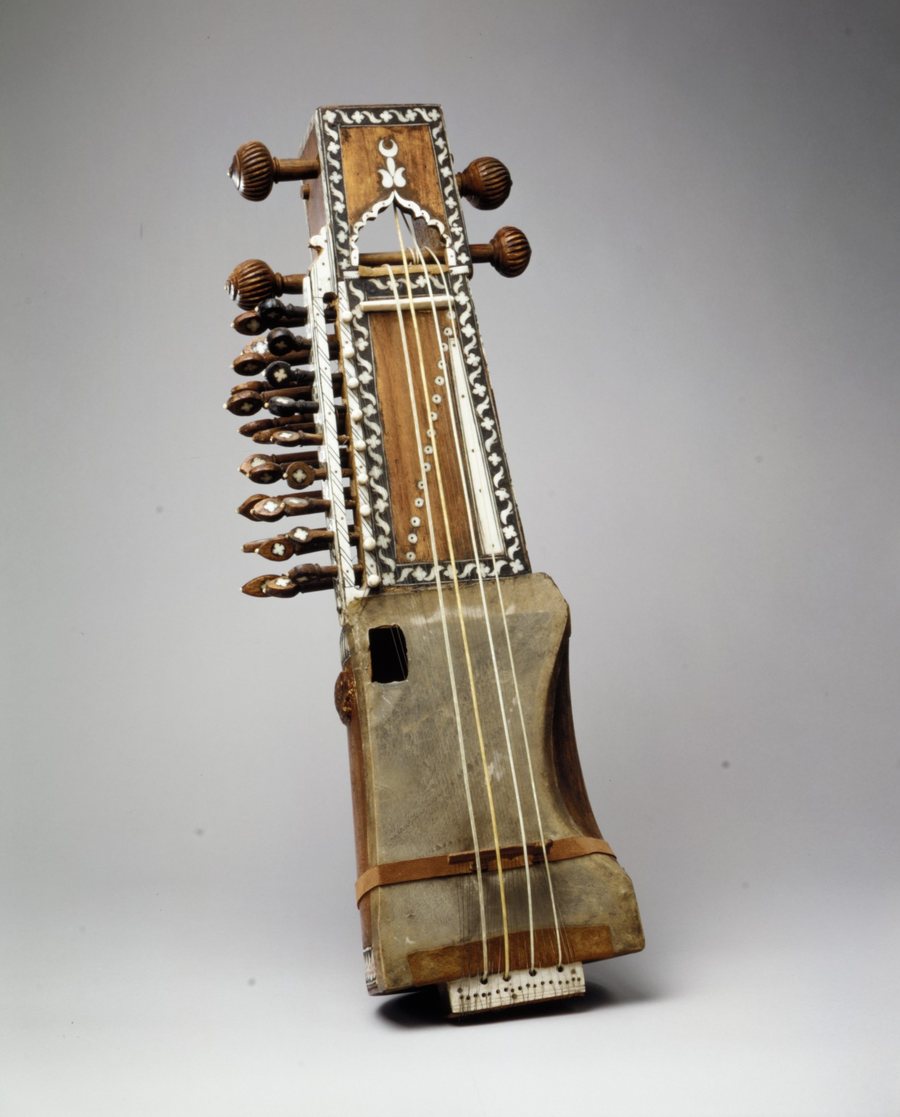
The Metropolitan Museum of Art · CC0 A short, boxy bowed instrument carved from one block of wood, with three thick gut playing strings and up to forty sympathetic ones. The strings are stopped with the fingernails, not the fingertips, and it is said to be the instrument closest to the voice. For a century it accompanied singers; Ram Narayan made it a solo instrument.
-
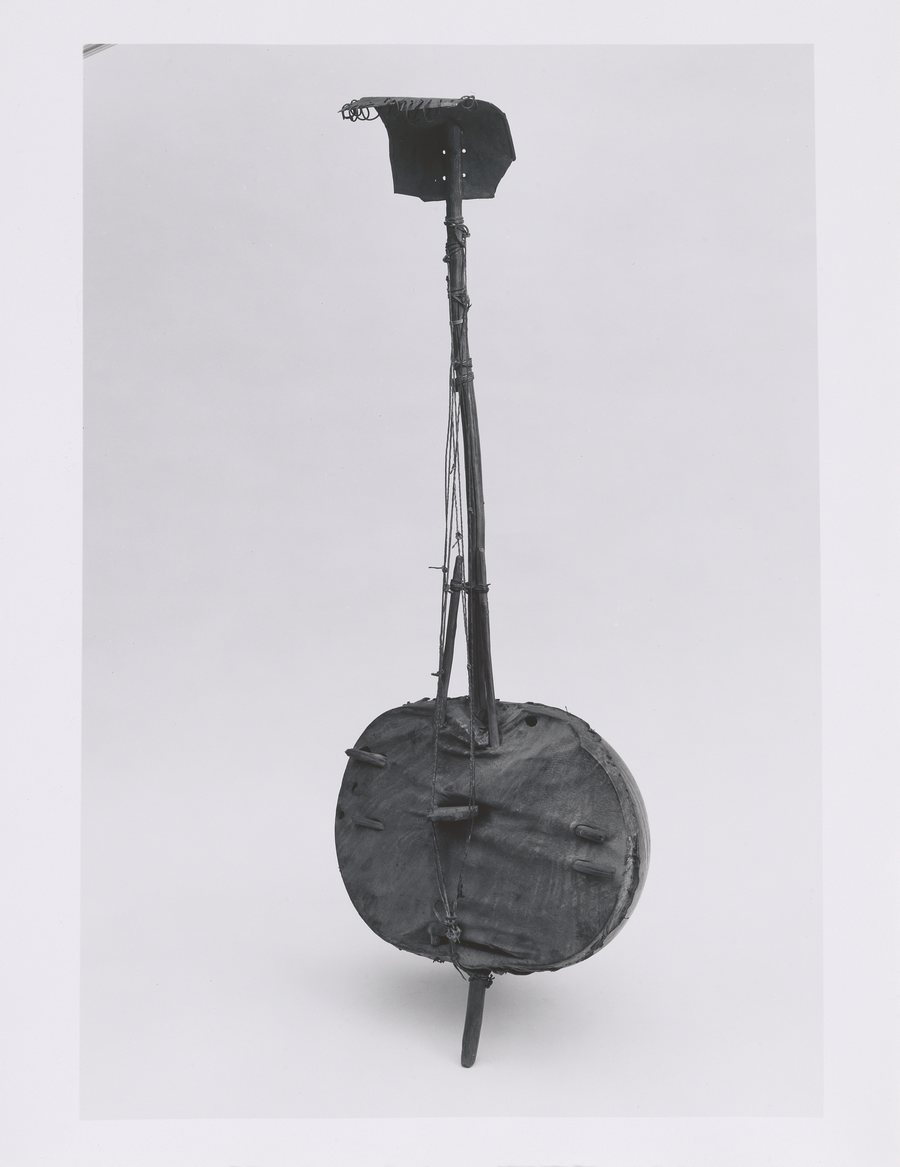
The Metropolitan Museum of Art · CC0 Ngoni
A small boat-shaped lute with a skin-covered body and a round stick neck, with four to seven strings. It is older than the kora, and the banjo descends from it by way of the Atlantic slave trade. Bassekou Kouyaté put a band of them together and amplified them.
-
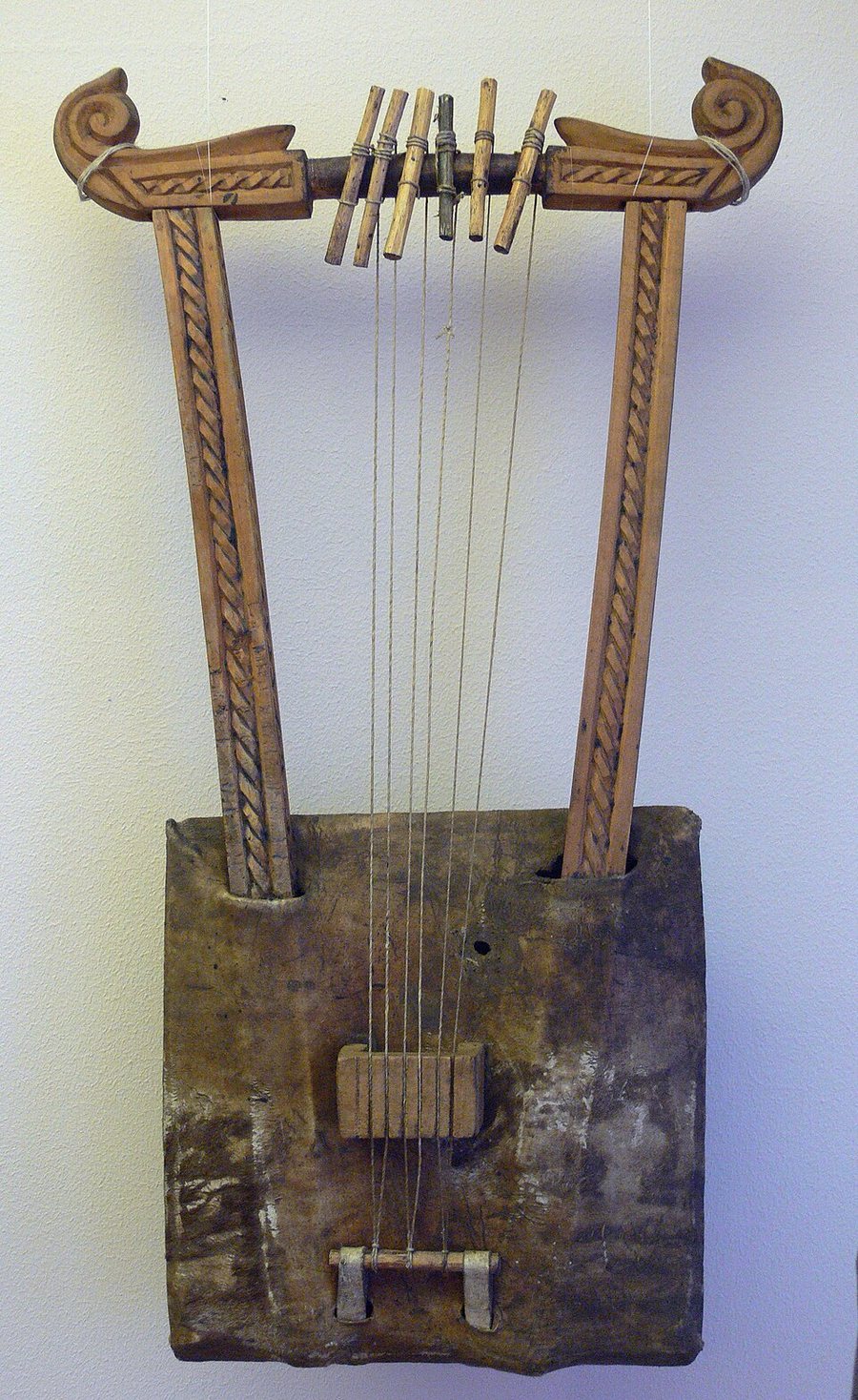
KarlHeinrich · Public domain A five- or six-string bowl lyre, the frame of two arms and a crossbar over a skin-covered bowl. It is strummed with the strings damped by the fingers of the other hand, or plucked, and it is tuned to one of Ethiopia's five-note modes. The azmari, the wandering minstrels, sing to it.
-
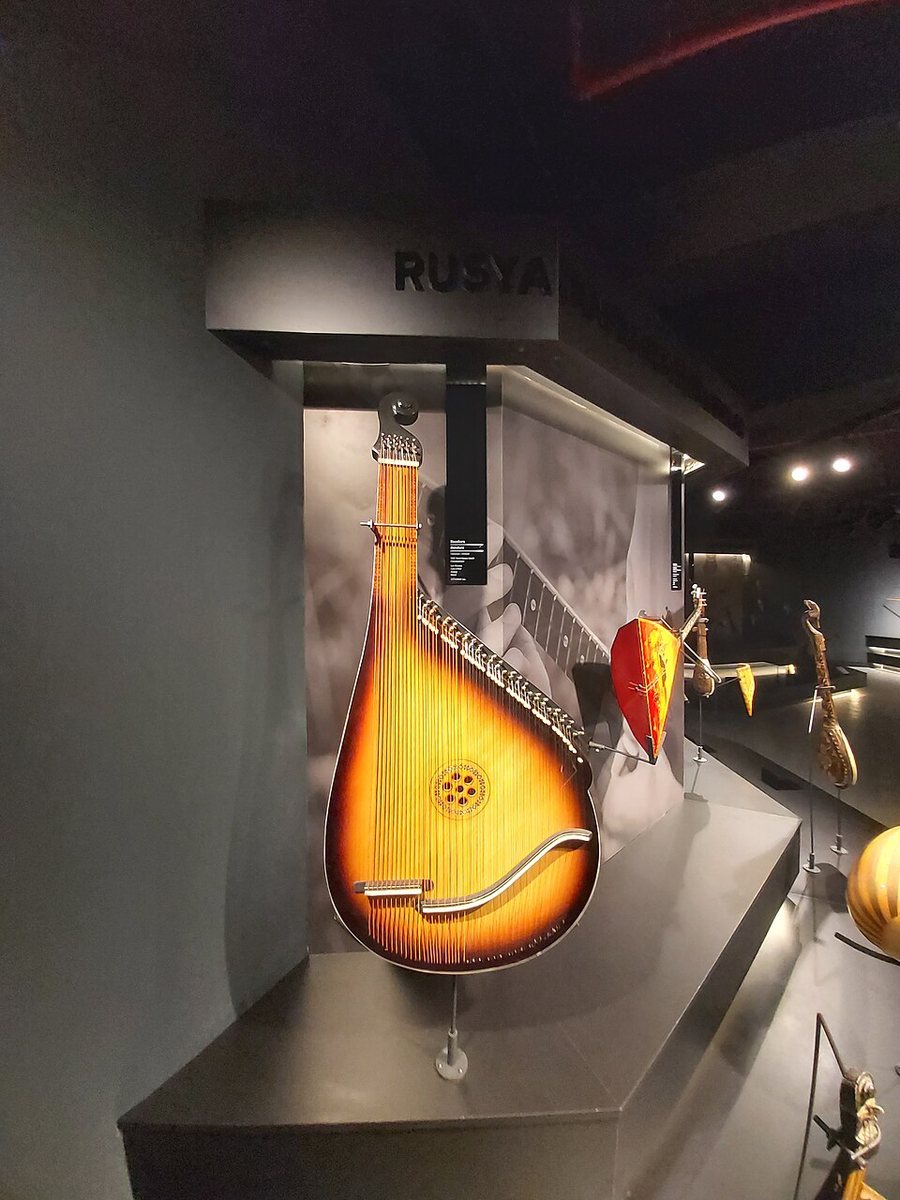
Basak · CC0 Bandura
A lute-zither: a few bass strings run up the short neck, and dozens of treble strings fan across the soundboard, plucked like a harp. It was the instrument of the blind kobzari, who sang epic ballads from village to village until Stalin had them killed in the 1930s.
-
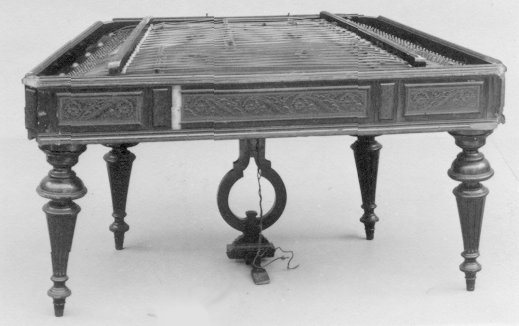
Vencel József Schunda · CC0 A large hammered dulcimer on four legs, with a damper pedal, 125 strings, and a pair of cotton-wrapped hammers. It is the engine of Hungarian and Romani bands, and its ancestor, the Persian santur, travelled the same road into Europe as the piano's hammered strings.
-
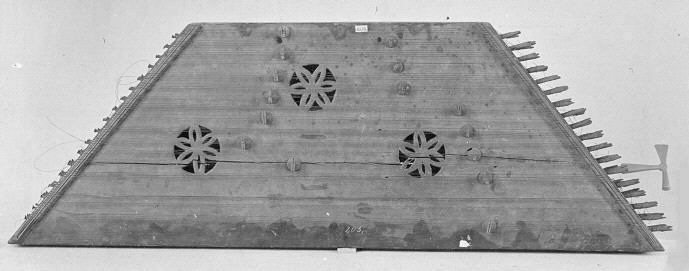
The Metropolitan Museum of Art · CC0 A trapezoid box with 72 strings in groups of four, struck with light wooden hammers held between the fingers. Its cascading, bell-like tone is one of the oldest sounds of Persian music, and its descendants are played from Greece to China and across Appalachia.
-
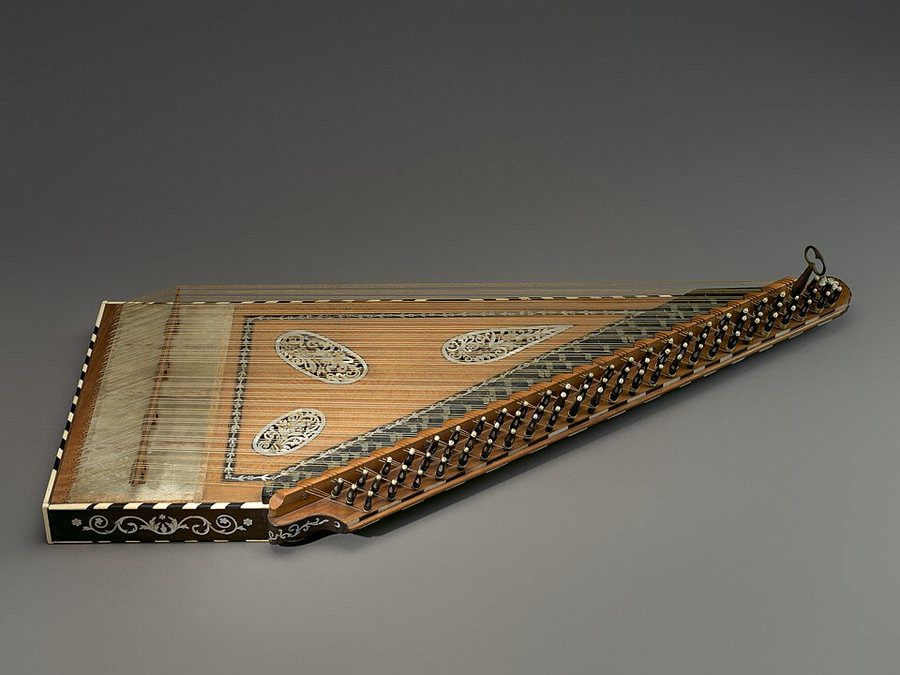
This file was donated to Wikimedia Comm… · CC0 A flat trapezoid zither of 78 strings plucked with tortoiseshell picks on two index fingers, with rows of tiny brass levers at the head for raising each string a fraction of a tone mid-performance. It gives Arab and Turkish ensembles their glittering backdrop.
-
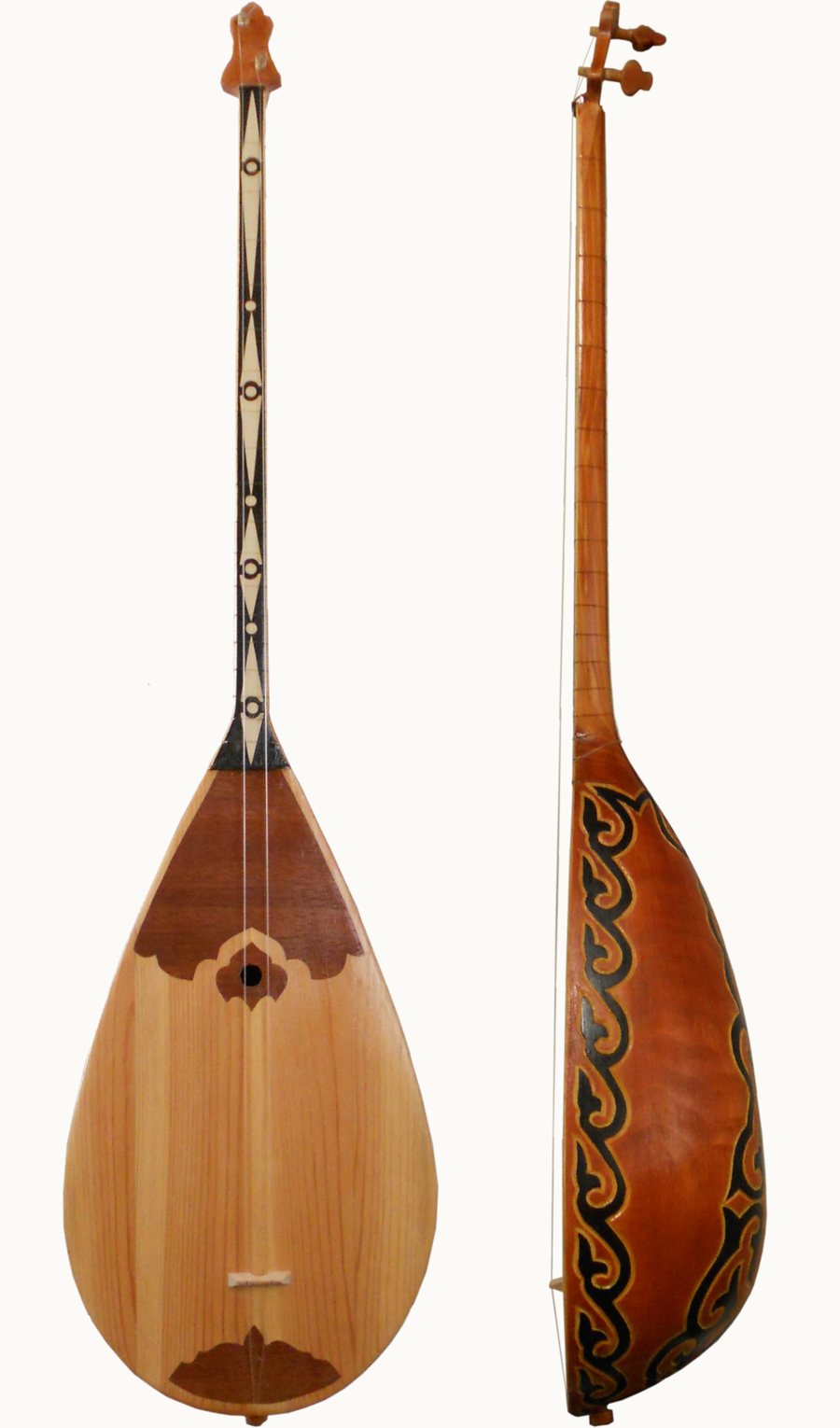
Mizu basyo · CC BY-SA 3.0 Dombra
A two-string long-necked lute with a pear-shaped body, strummed and plucked fast. The Kazakh repertoire of küi, wordless instrumental pieces that tell a story, is played on it, and a Kazakh proverb says the real Kazakh is not the Kazakh but the dombra.
-
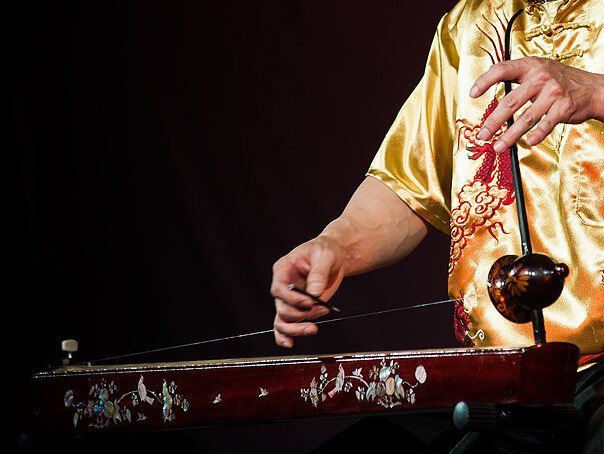
Jacek Karczmarczyk · CC BY 3.0 Đàn bầu
A single string over a long wooden box, with a flexible rod and a gourd at one end. The player plucks a harmonic and bends the rod to swoop the pitch up and down, so one string speaks the tones of Vietnamese. It is one of the few true monochords in the world's folk music.
-
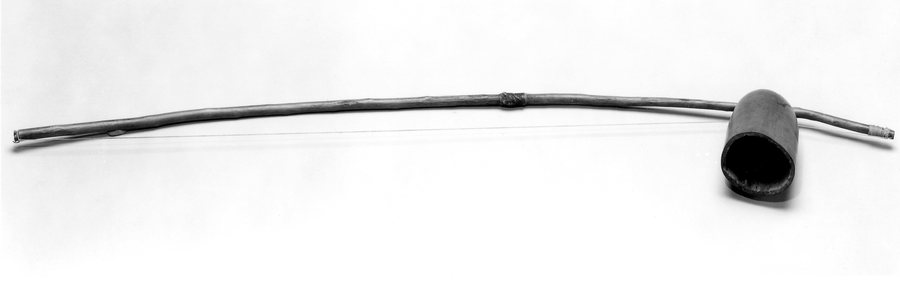
The Metropolitan Museum of Art · CC0 A musical bow: a wooden stave, a wire string, and a gourd resonator held against the belly. One hand holds a coin or stone to the string and shakes a rattle, the other strikes with a thin stick. From Angola, it leads the roda of capoeira in Brazil, and its rhythm tells the players which game to play.
-
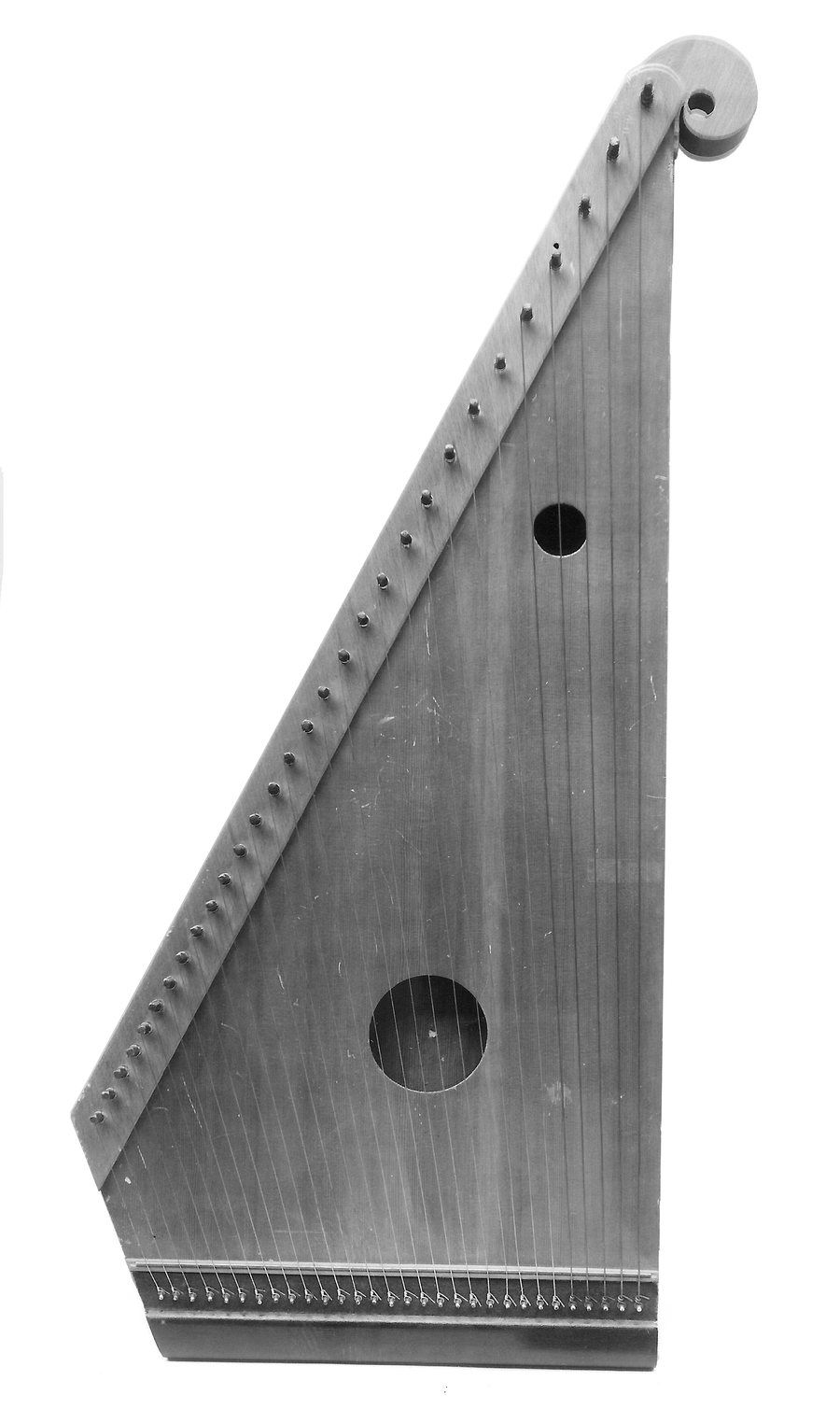
The Metropolitan Museum of Art · CC0 Kantele
A small plucked zither, traditionally with five strings carved from one piece of wood. In the Kalevala, Väinämöinen makes the first one from the jawbone of a giant pike. Concert kanteles have forty strings; the five-string one is still what Finnish children learn.
Bläser
Aerophone 17 Instrumente-
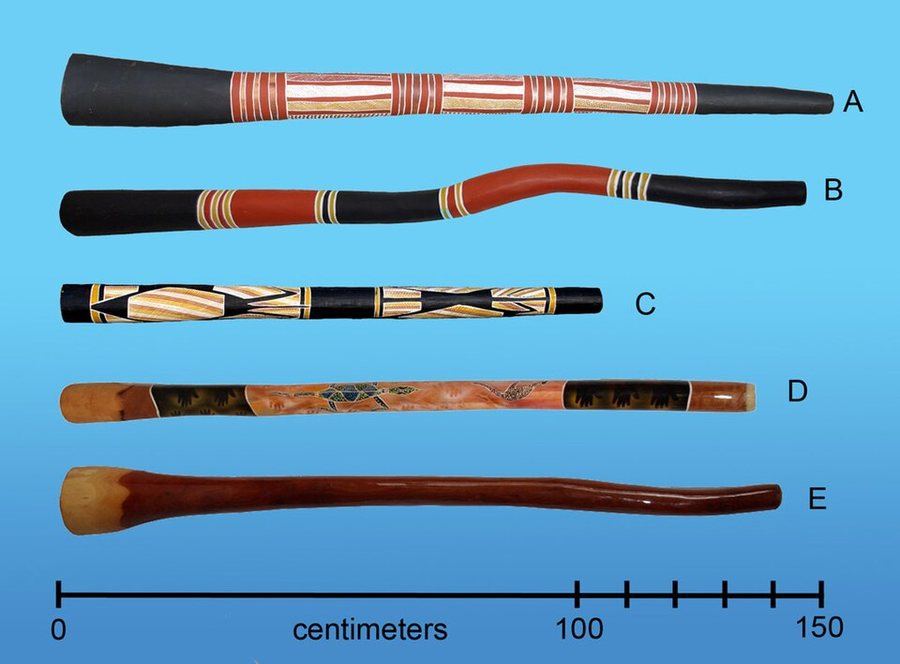
Hmarin · Public domain Didgeridoo
A eucalyptus branch hollowed out by termites, cut to length, with a beeswax mouthpiece. It sounds one deep drone that the player shapes with the mouth, voice and circular breathing into rhythms and animal calls. It comes from Arnhem Land in the north, where the Yolŋu call it yidaki.
-
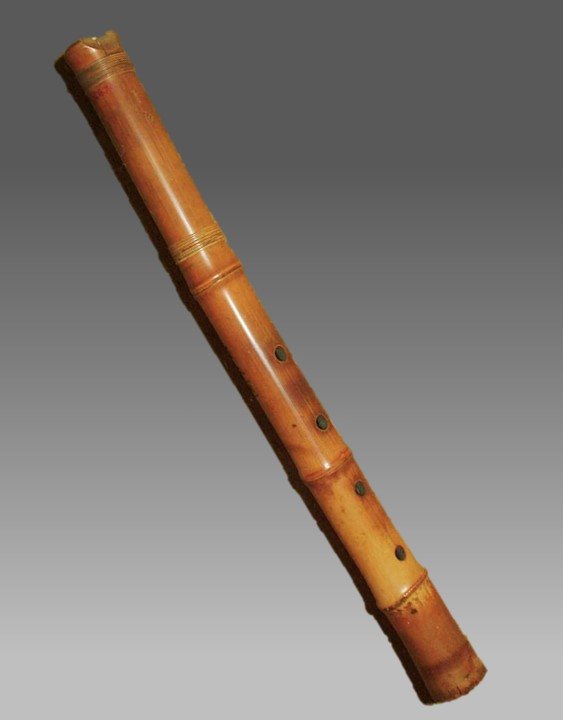
The Metropolitan Museum of Art · CC0 Shakuhachi
An end-blown bamboo flute cut from the root end of the stalk, with four holes in front and one behind. By tilting the head the player bends every note and shades it with breath. Zen monks of the Fuke sect played it as meditation, and their pieces, the honkyoku, are its core.
-
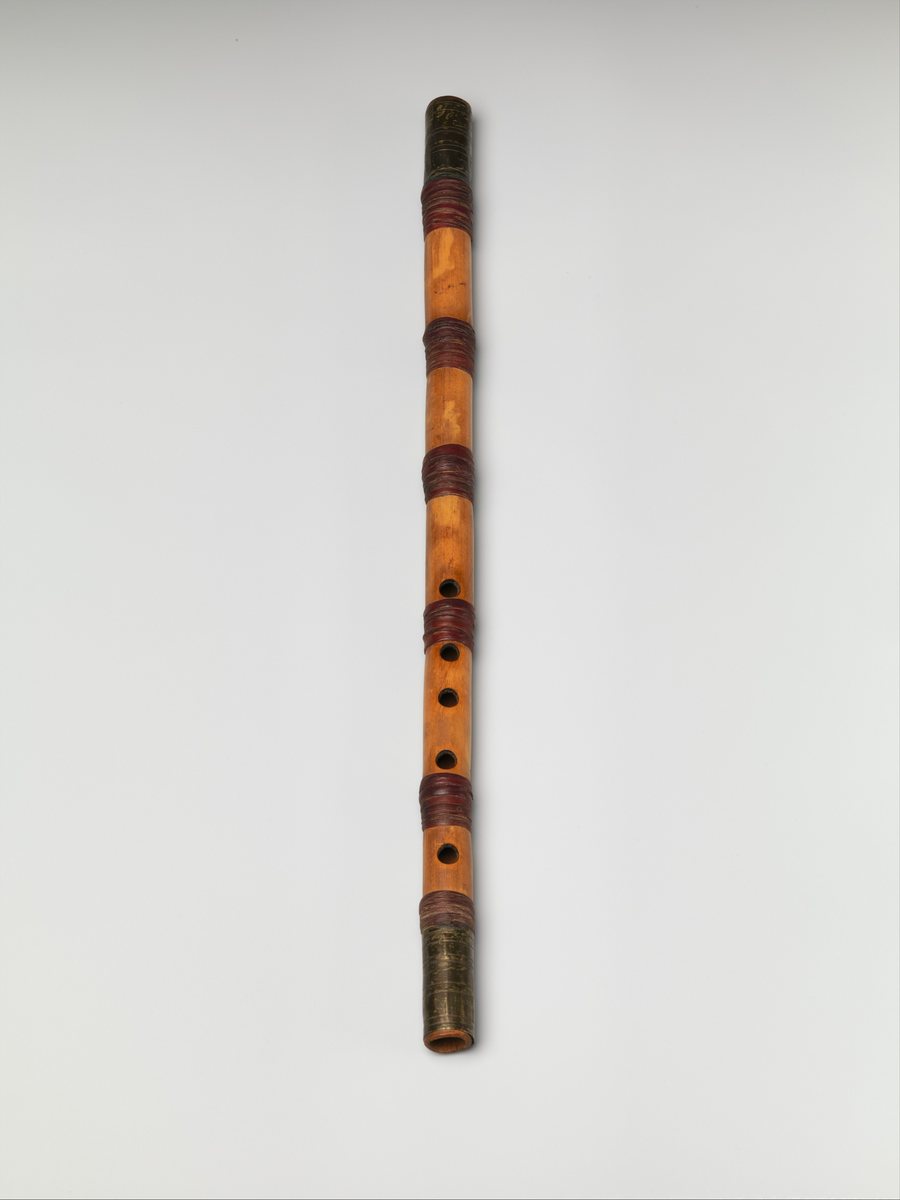
The Metropolitan Museum of Art · CC0 A reed flute with no mouthpiece at all: the player blows across the open end, or against a horn lip in the Turkish version. It is the breathiest instrument there is, and the Mevlevi dervishes hear in it the reed crying for the reed bed it was cut from, as Rumi's Masnavi opens.
-
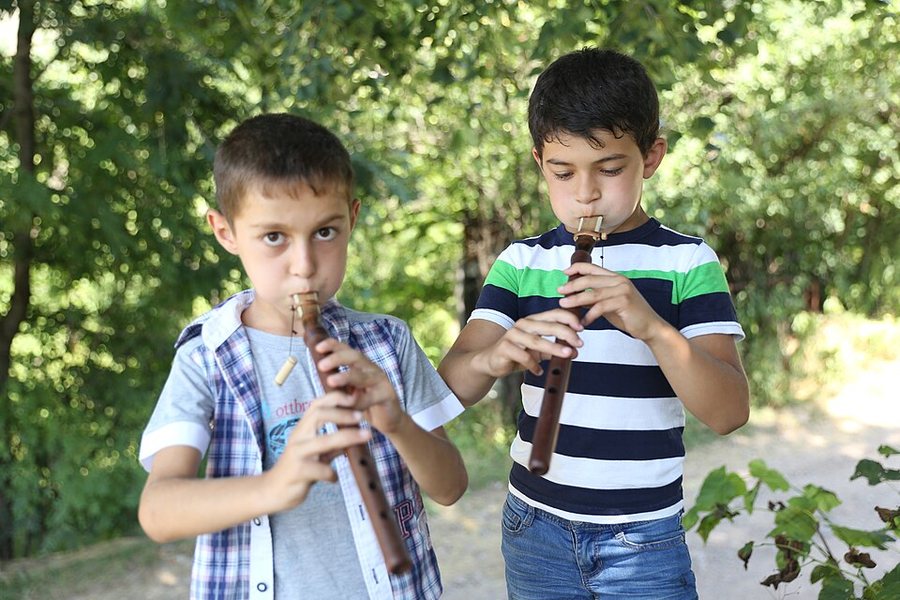
Andznakan · CC BY-SA 4.0 Duduk
A cylindrical pipe of apricot wood with a very wide, flat double reed. The tone is soft, dark and close to a voice, and it is almost always played in pairs, one holding a drone. Djivan Gasparyan carried it from Armenian villages to the world's film scores.
-
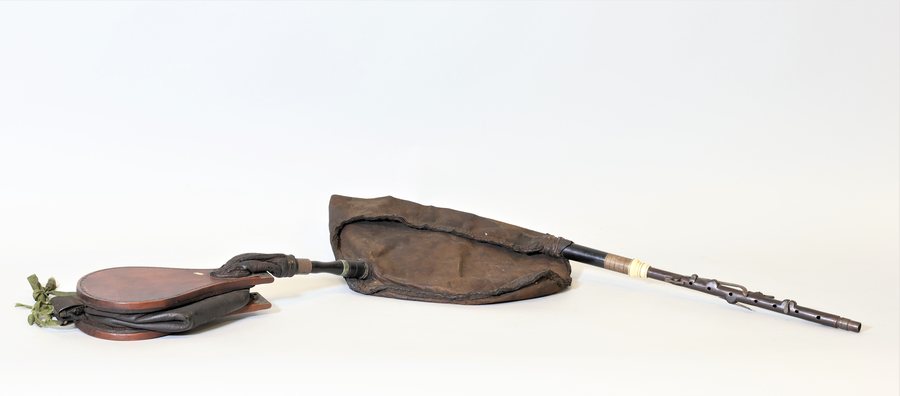
The Metropolitan Museum of Art · CC0 Uilleann pipes
The Irish bagpipe, pumped with a bellows under the elbow, played sitting down and quiet enough for a kitchen. Besides the chanter and three drones it has regulators, keyed pipes that the wrist can press for chords. It takes, pipers say, seven years learning, seven practising and seven playing.
-
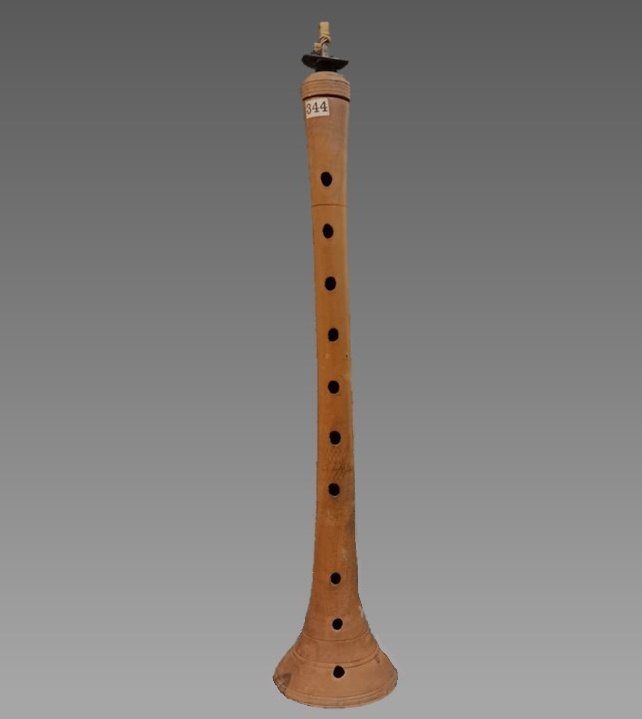
The Metropolitan Museum of Art · CC0 Zurna
A conical shawm with a flared bell and a short double reed, blown with the lips pressed on a disc and the cheeks as a reservoir. It is as loud as an instrument can be without electricity and it never plays alone: a zurna and a big davul drum are the sound of a wedding from the Balkans to Iran.
-
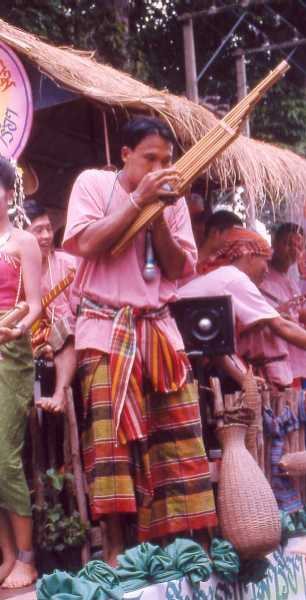
Wikimedia Commons · CC BY-SA 3.0 A bamboo mouth organ: two rows of pipes, each with a free metal reed, set in a wooden wind chest and sounding on both the in and out breath. It can play chords and drones together and never stops for air. It is the instrument of Laos, and of mor lam, the song of the Lao-speaking northeast of Thailand.
-
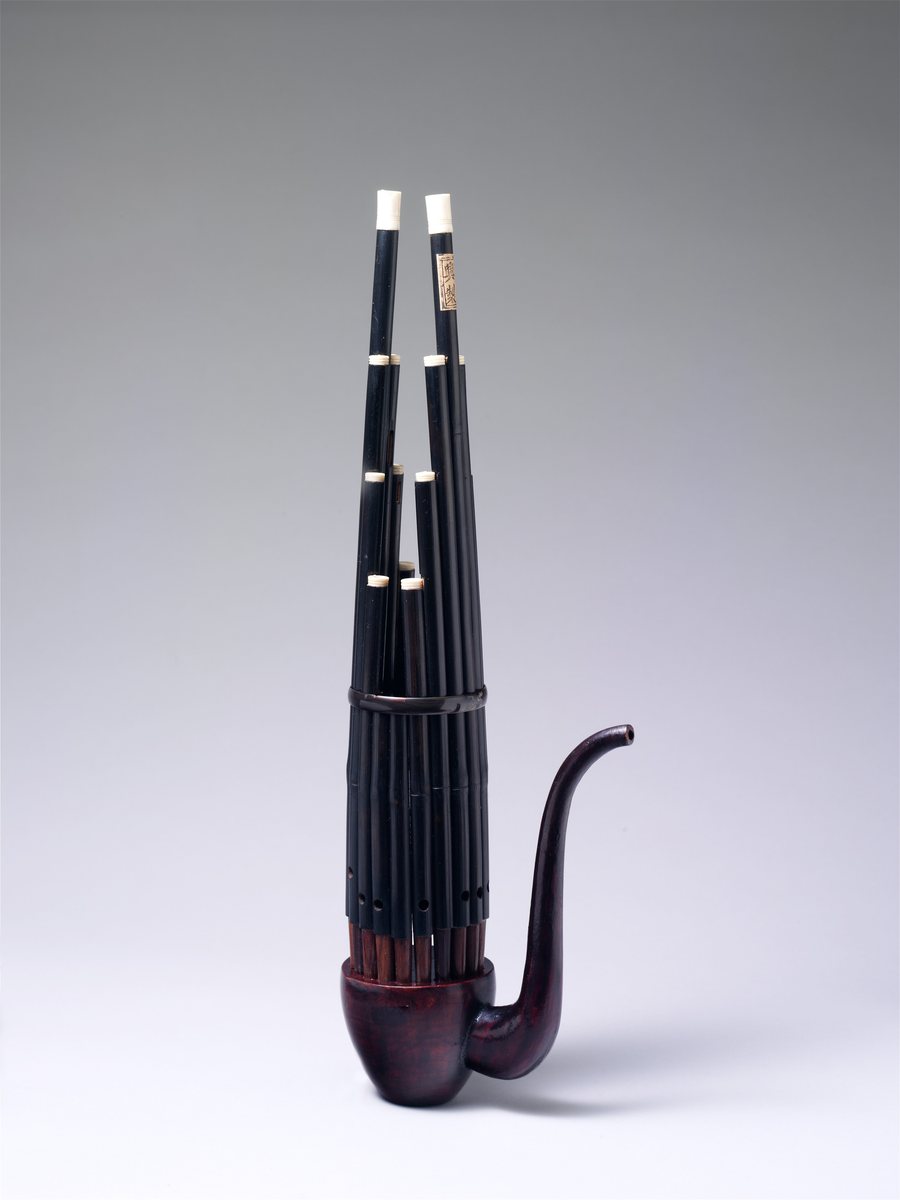
The Metropolitan Museum of Art · CC0 Sheng
A mouth organ with up to 37 bamboo pipes set upright in a metal bowl, each with a free reed, played by covering finger holes while breathing in or out. It is among the oldest Chinese instruments, three thousand years in the record, and it is the ancestor, through a long road west, of the harmonica and accordion.
-
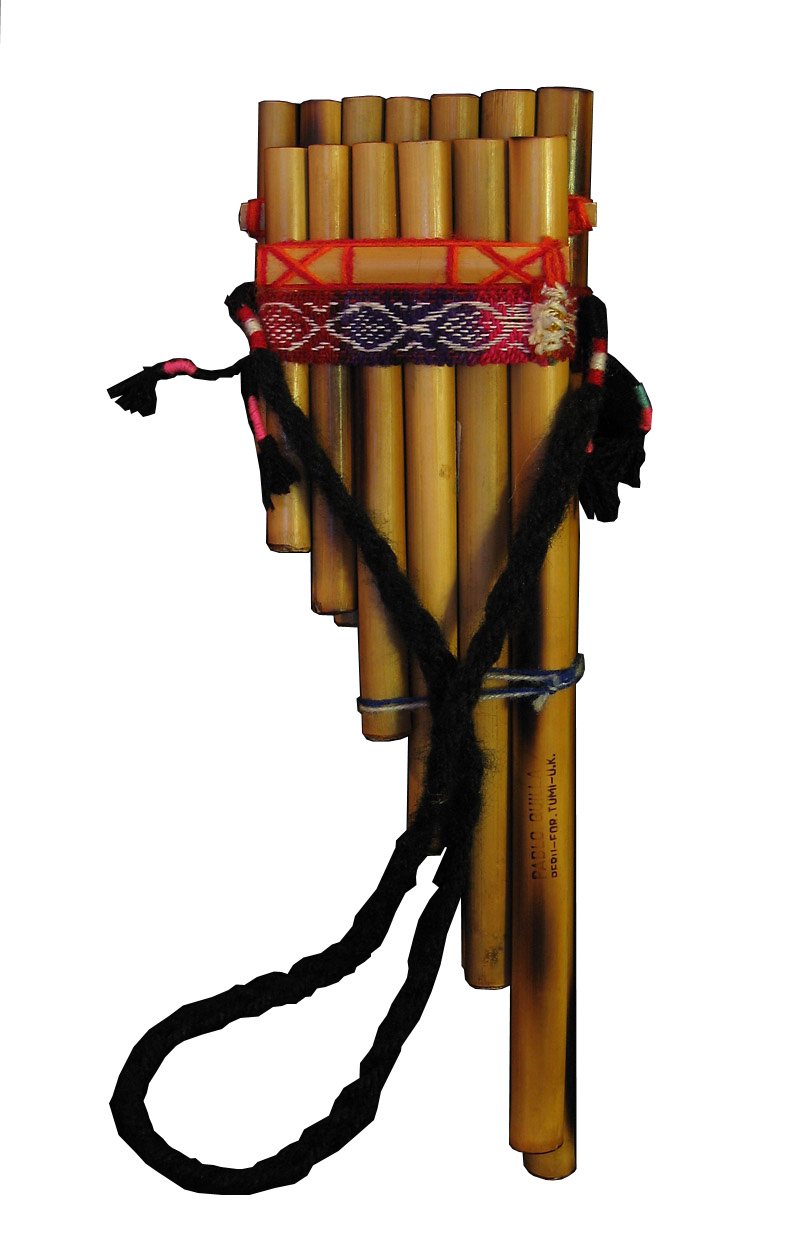
Photograph © Andrew Dunn. Website: http… · CC BY-SA 1.0 Andean panpipes, two rows of bamboo tubes tied in a raft. The scale is split between two halves played by two people, who alternate notes so fast it sounds like one. Whole villages play them in sikuri bands, dozens strong, with big bass drums, at festivals above 3,500 metres.
-
Harald Fritz · CC BY-SA 4.0 Alphorn
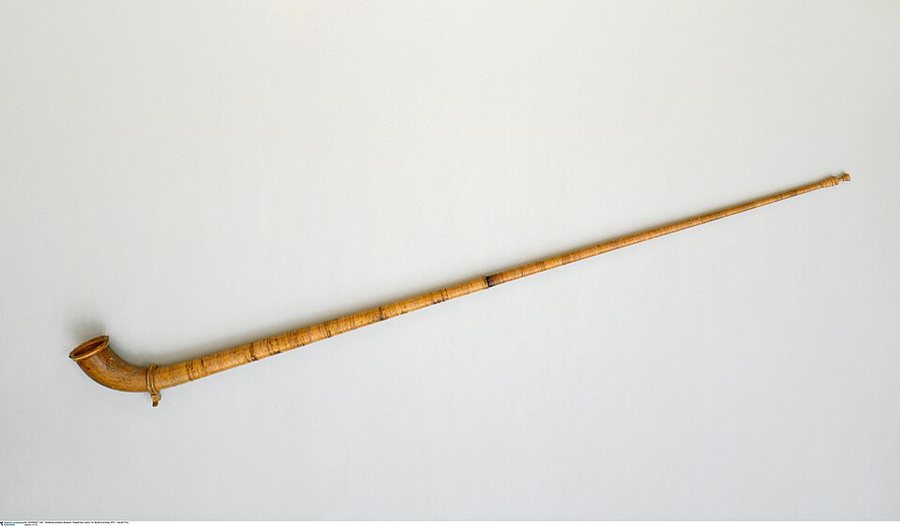
A straight wooden horn up to four metres long, with a flared bell that rests on the ground. It has no valves or holes, so it plays only the natural harmonics, including the sharp eleventh, the alphorn-fa, that sounds out of tune to a piano and right on a mountainside.
-
The Metropolitan Museum of Art · CC0 Kaval
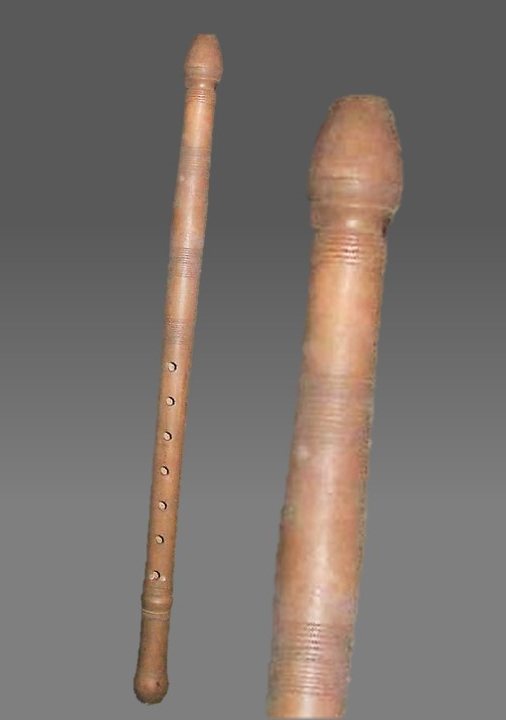
A long rim-blown flute, open at both ends, held at an angle and played with the lips against the edge. It has three registers with quite different voices, from a breathy low to a bright, almost reedy high. It is the shepherd's instrument of the Balkans and the soloist of Bulgarian folk music.
-
The Metropolitan Museum of Art · CC0 Dizi
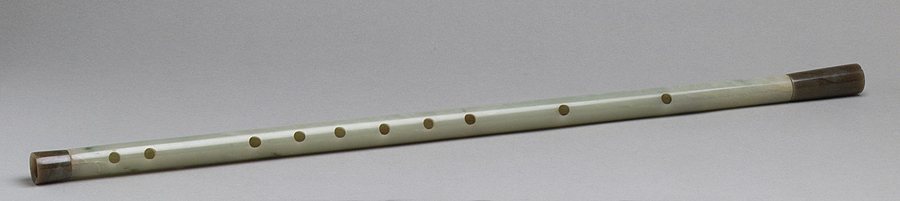
A transverse bamboo flute with one extra hole covered by a paper-thin membrane of reed skin, which buzzes and gives the dizi its bright, nasal, carrying tone. It plays the operas of the south and the fast, ornamented pieces of the north.
-
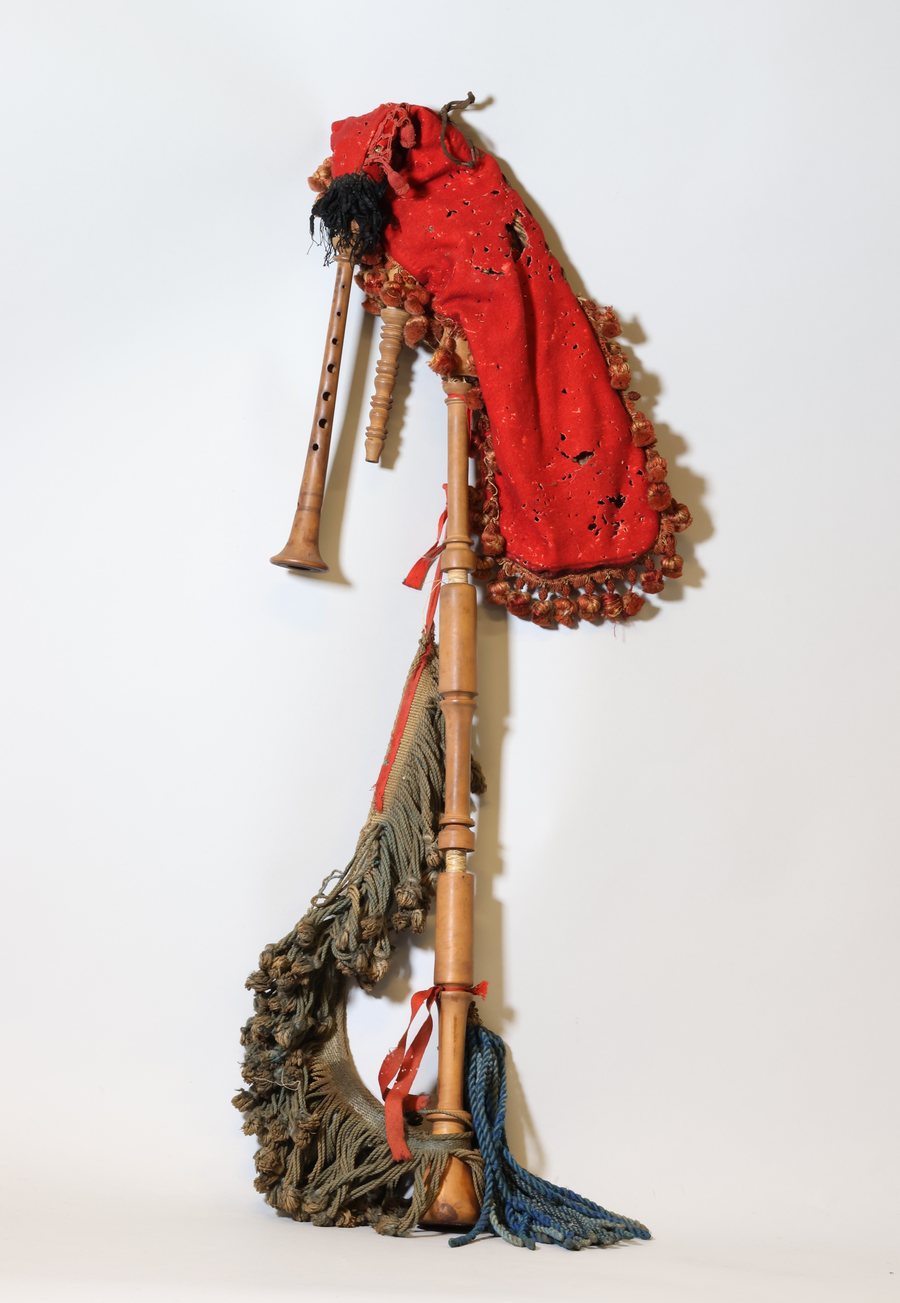
The Metropolitan Museum of Art · CC0 The bagpipe of Galicia and Asturias, with one conical chanter, a bass drone over the shoulder and a bright, open sound. Bagpipes belong to the whole Atlantic rim, and the gaita's muiñeira dances and the Breton and Scottish pipes are a single tradition with the sea in the middle.
-
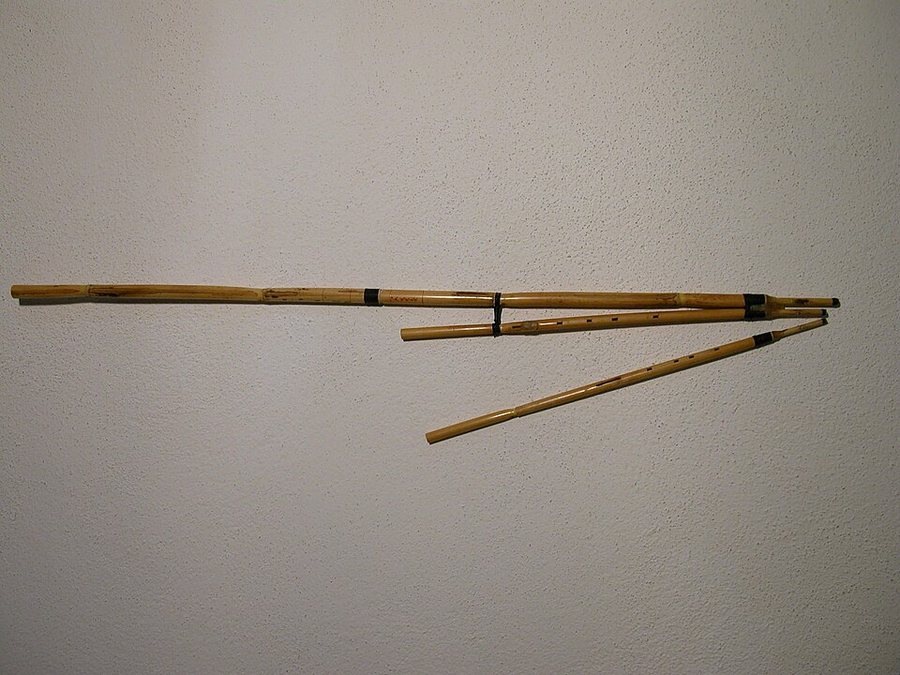
Giorgio Pili · CC BY-SA 3.0 Launeddas
Three cane pipes played at once, held together in the mouth: a drone, and two melody pipes with single reeds, one in each hand, in circular breathing. A bronze figurine of a man playing them was found in Sardinia from around 900 BC, and the instrument has not changed.
-
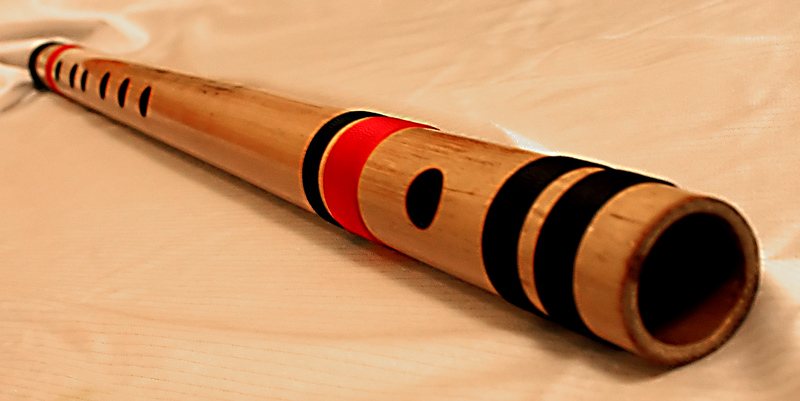
Betelgeuse · CC BY-SA 3.0 Bansuri
A transverse flute of a single length of bamboo with six or seven holes, and nothing else. It is the instrument of Krishna, who plays it to the cowherd girls in every painting. Half-holing and sliding fingers give it the long bends of raga.
-
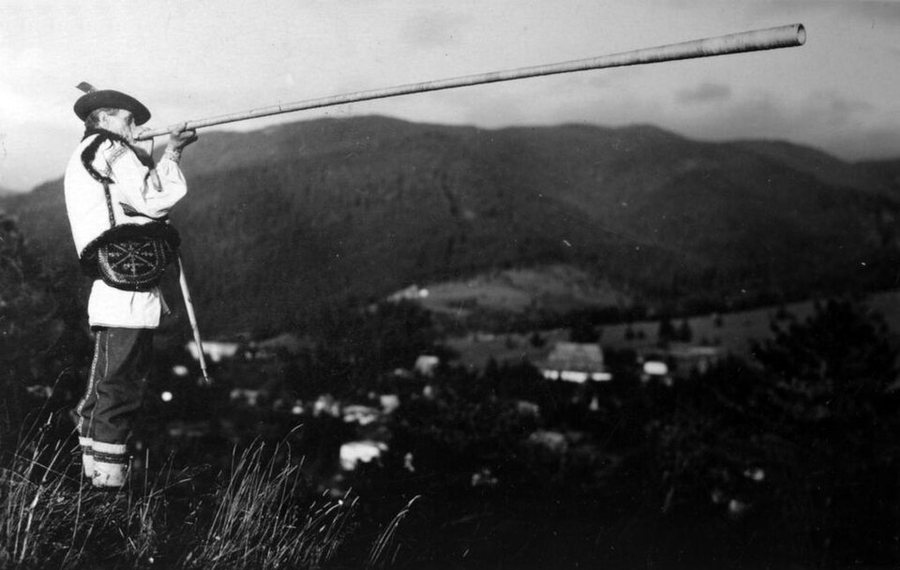
Unknown authorUnknown author · Public domain A wooden trumpet up to four metres long, of spruce struck by lightning, wrapped in birch bark. The Hutsul shepherds of the Carpathians played it to announce a death, a wedding or the return of the flocks, and its call carries ten kilometres across the valleys.
-
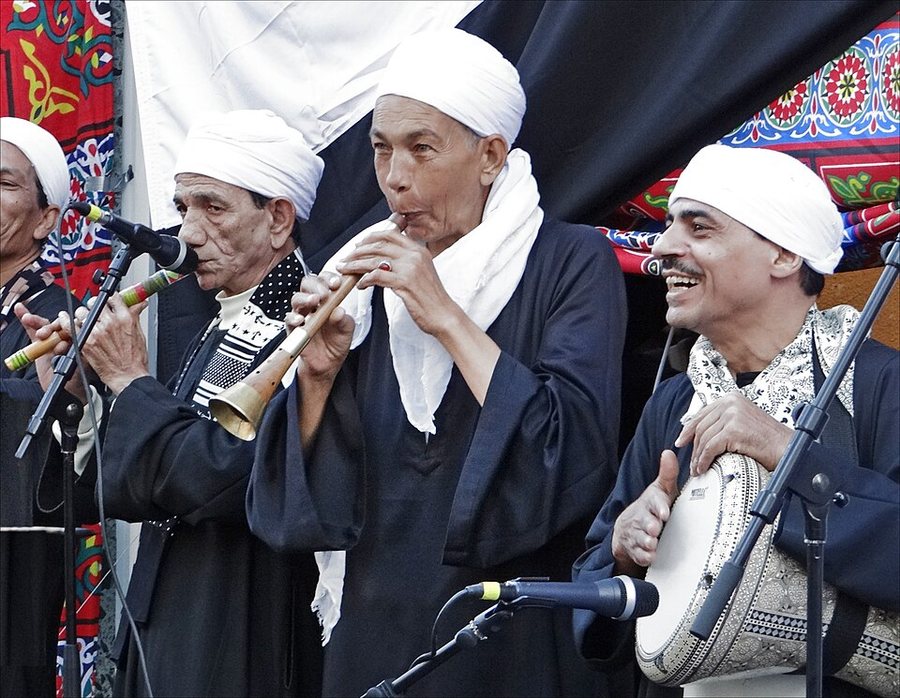
dalbera from Paris, France · CC BY 2.0 Mizmar
Egypt's shawm, a loud conical pipe with a double reed, played in groups of three or four with a big tabl baladi drum at weddings, saints' festivals and the stick-fighting dance tahtib. Its ancestor is on the walls of pharaonic tombs.
Trommeln
Membranophone 13 Instrumente-
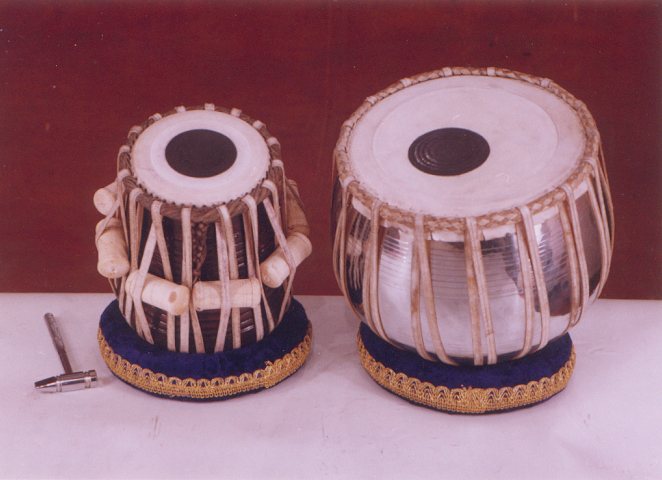
Wikimedia Commons · CC BY-SA 3.0 Tabla
A pair of hand drums: the small wooden dayan tuned to the singer's key and the metal bayan whose pitch the heel of the hand bends. Each head carries a black patch of iron filings and rice paste that gives it a ringing tone. Players speak its strokes as syllables, dha dhin dhin dha, before they play them.
-
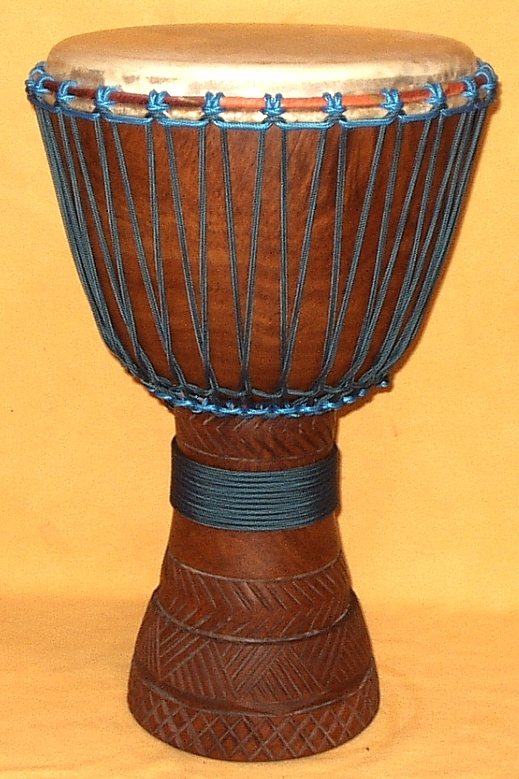
Djembe Art · CC BY-SA 3.0 Djembe
A goblet drum carved from a single trunk of hardwood with a goatskin head roped on tight. It gives three clearly different notes, bass, tone and slap, and it is played standing, in an ensemble with bass drums called dununba. It is the Mande drum, and since Les Ballets Africains it is the world's.
-
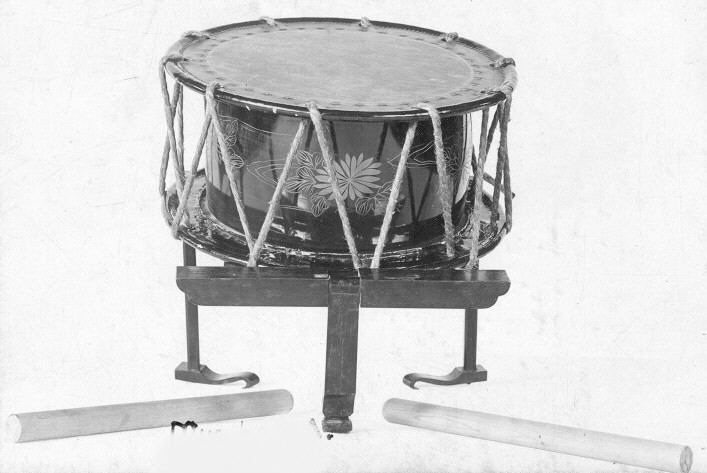
Nambuya Keikichi, Tokyo, Asakuja, Kamej… · CC0 Taiko
Japanese drums of every size, from the small shime-daiko to the ō-daiko over a metre across, cut from one tree trunk and played with heavy sticks. In the temple and the festival they were played alone; ensemble taiko, with its choreography and shouting, was invented in 1951 and spread by the group Kodo.
-
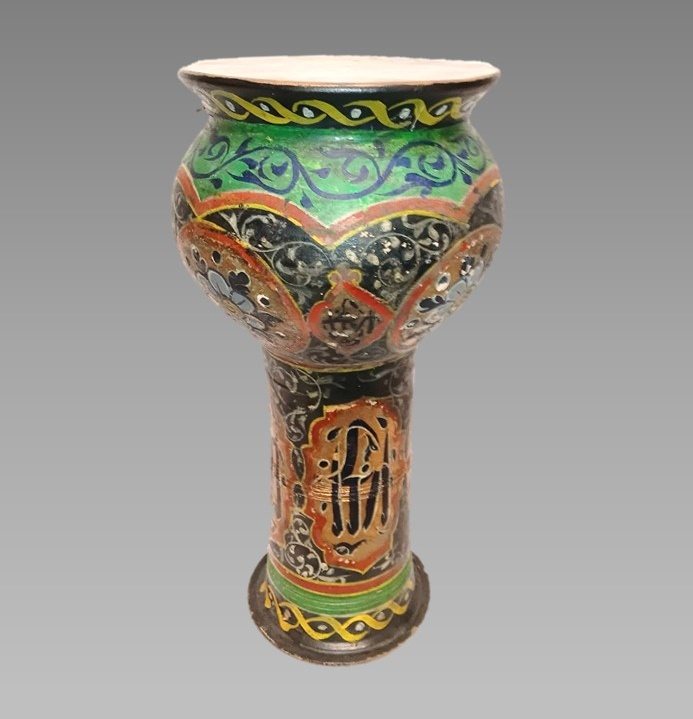
The Metropolitan Museum of Art · CC0 A goblet drum of clay or metal with a thin fish-skin or plastic head, held under the arm or across the knee and played with fingers and the snapping ring finger. It is the rhythm of the Arab world and Turkey, and the drum that a belly dancer answers.
-
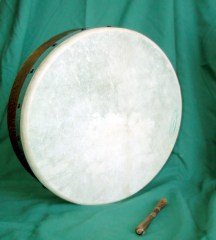
Wikimedia Commons · CC BY-SA 3.0 Bodhrán
A goatskin frame drum held against the body and played with a short two-ended stick, the other hand pressing the skin from behind to change the pitch. Though it looks ancient it entered Irish dance music only in the 1960s, with Seán Ó Riada, and became its heartbeat.
-
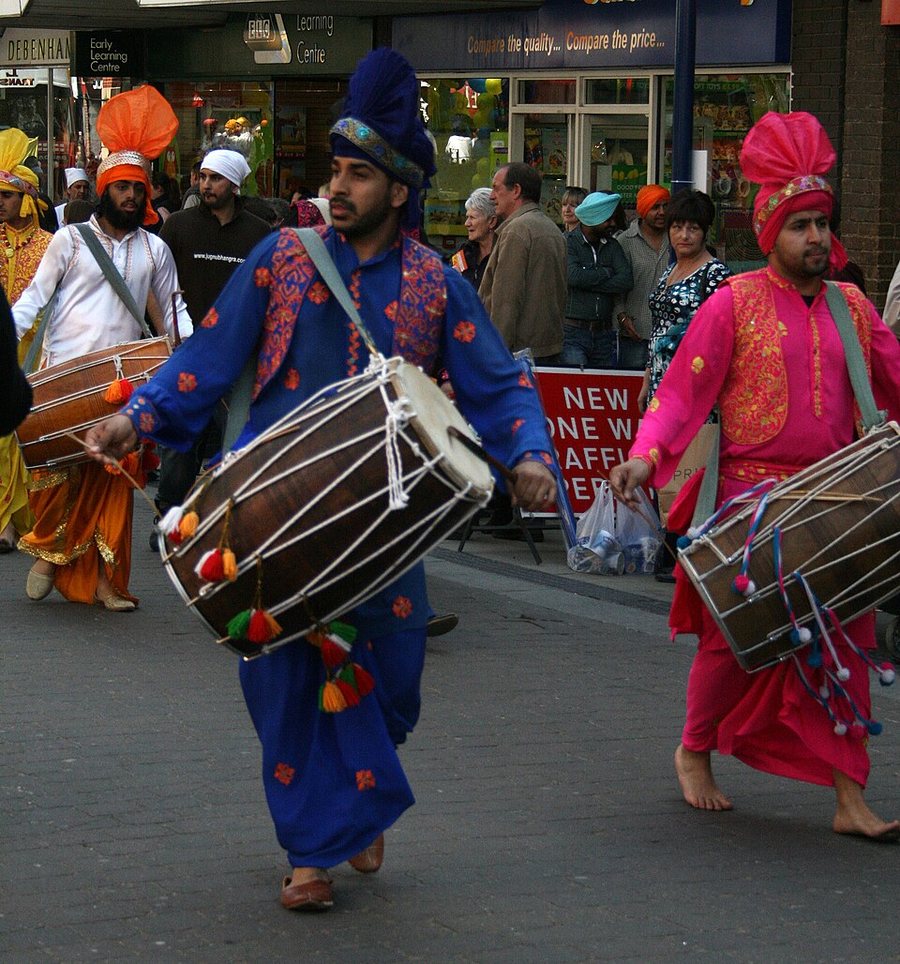
L2F1 · CC BY 2.0 A big barrel drum hung from the neck and beaten on both heads with two different sticks, a thin cane for the treble and a heavy curved one for the bass. It is the drum of Punjab, of bhangra and the harvest, of weddings and, since the 1980s, of British-Asian dance floors.
-
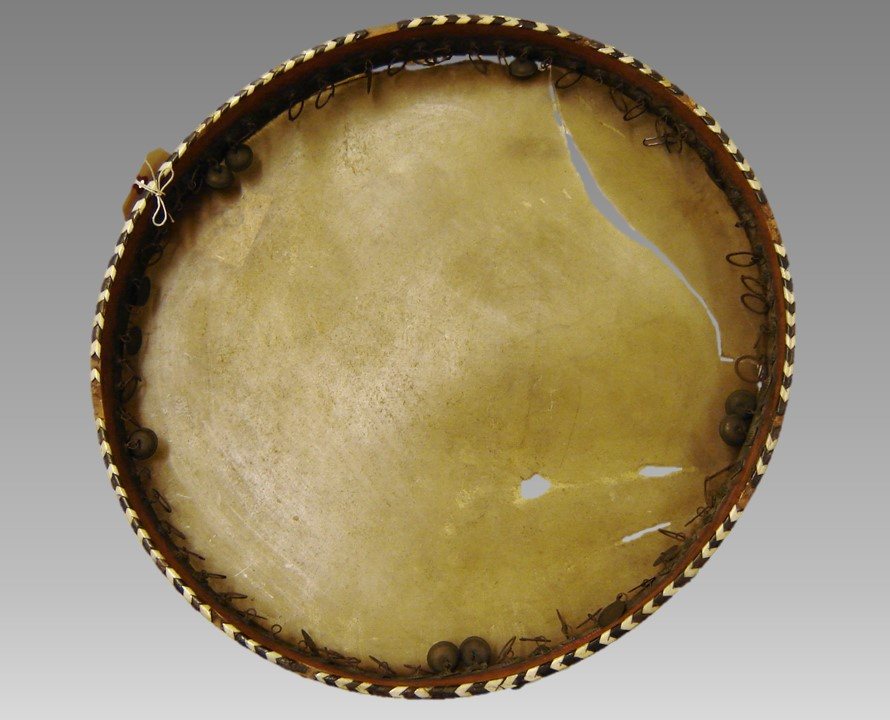
The Metropolitan Museum of Art · CC0 Daf
A large frame drum with rows of metal rings inside the rim that rustle and crash against the skin. In Kurdish Sufi lodges a line of men play dafs for hours as the zikr rises, and the drum is held to carry the breath of the prayer.
-
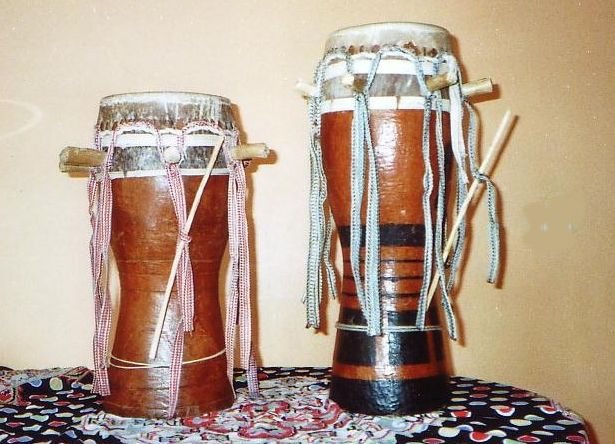
Michael Brouwer, Amsterdam, the Netherlands · CC BY-SA 3.0 The tall Wolof drum, played with one hand and one thin stick, in ensembles of seven different sizes with the lead drummer calling the dance. Doudou Ndiaye Rose led a hundred of them at once. The sabar's rhythms, electrified, became mbalax, the pop music of Dakar.
-
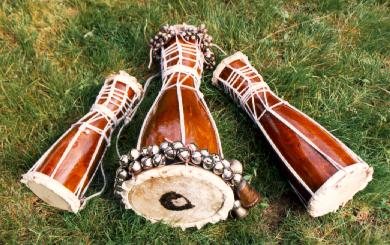
Photo by Kenneth Ritchards. Bata drums … · Public domain Three double-headed hourglass drums, the iyá, itótele and okónkolo, laid across the lap and played on both ends. They came with the Yoruba to Cuba and are sacred to the orishas; a consecrated set is fed, named and sworn to. Each rhythm calls one deity.
-
The Metropolitan Museum of Art · CC0 Kundu
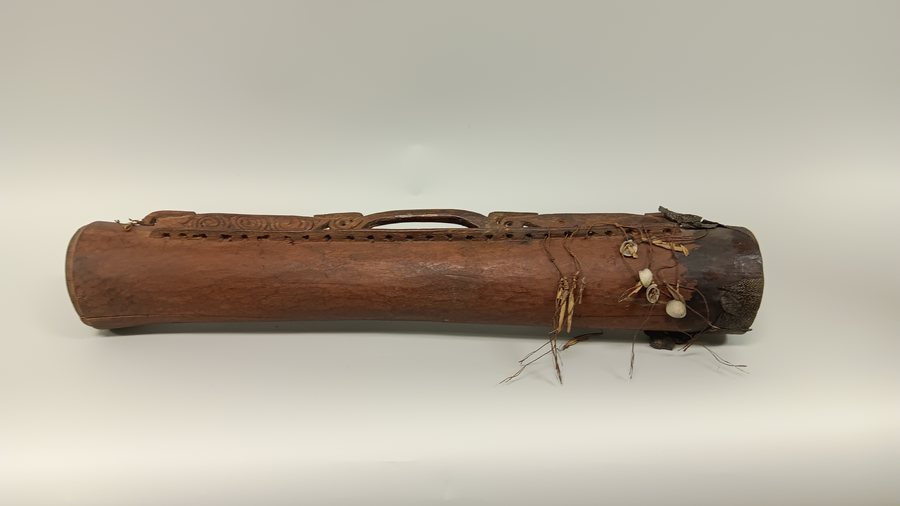
An hourglass drum carved with a handle at the waist, the head of lizard or snake skin, tuned with beeswax pellets. Every people of Papua New Guinea has its own shape of it, and at a sing-sing hundreds of dancers play their own kundu as they move.
-
Michal Maňas · CC BY 4.0 Tapan
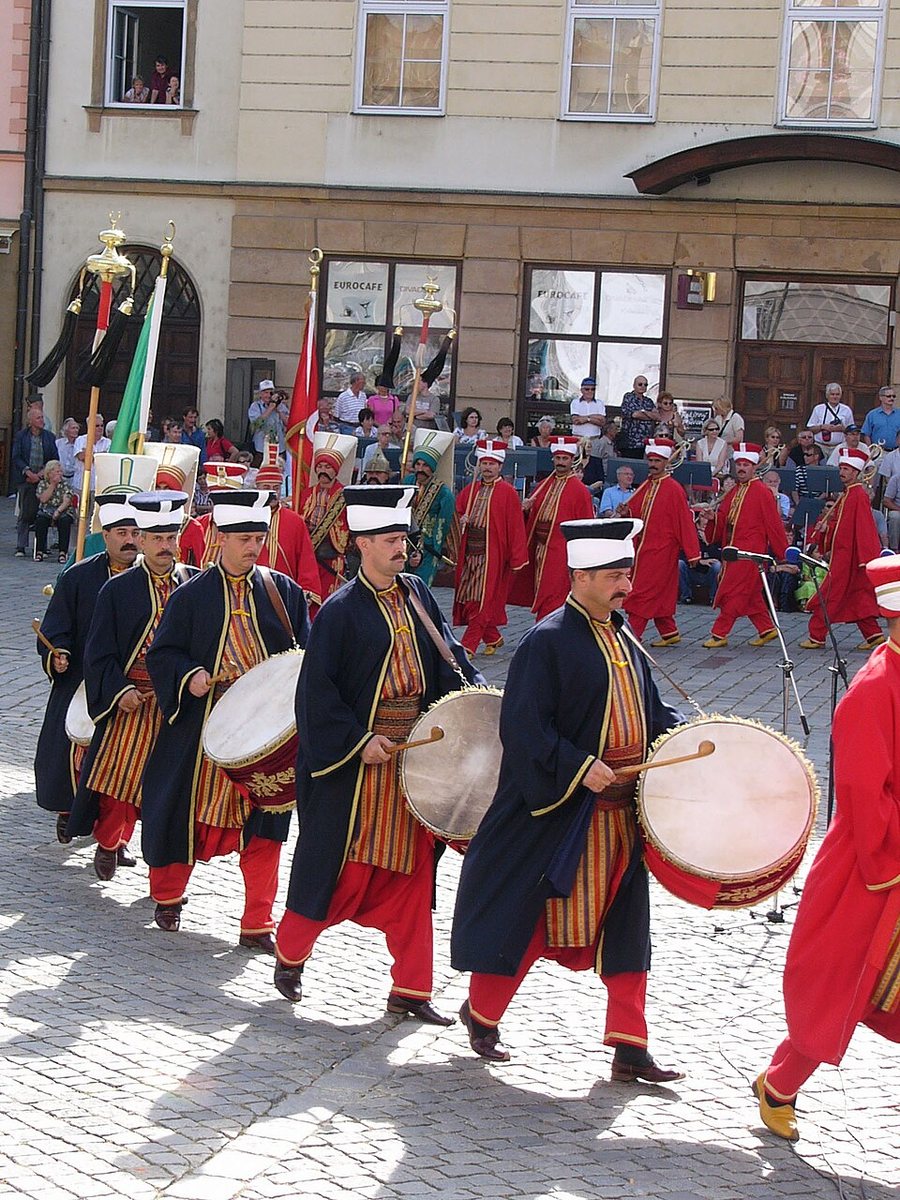
The big double-headed Balkan drum, slung from the shoulder, beaten with a heavy mallet on one head and a thin switch on the other, so it gives both the boom and the crack. With a pair of zurlas it drives the dances of weddings and wrestling matches.
-
AIDEPCUL · CC BY 4.0 Doira
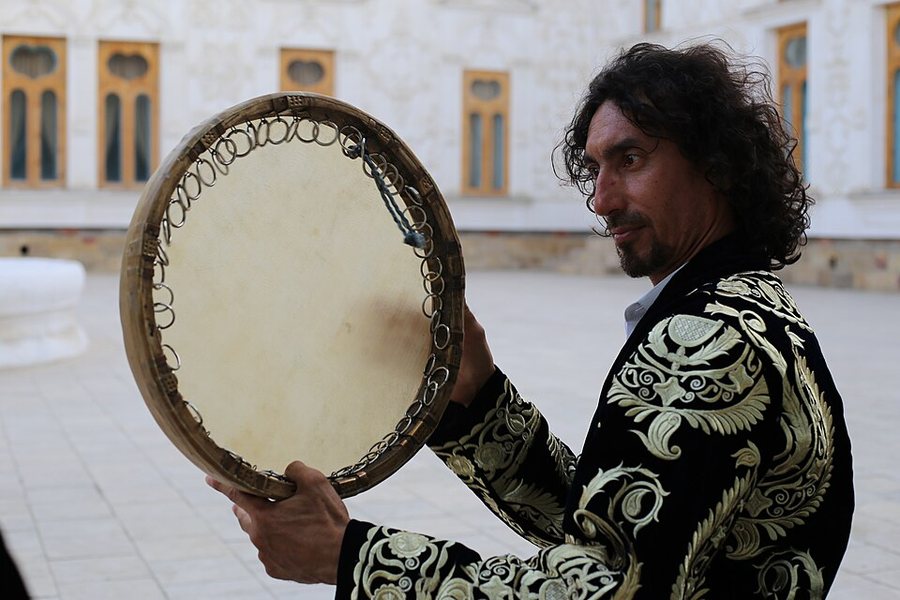
A large frame drum with rings in the rim, played with the fingers of both hands in fast, extraordinarily complex patterns. In Central Asian classical music, the shashmaqam, it sets the rhythmic cycle; in a wedding it is a woman's instrument, and the loudest in the room.
-
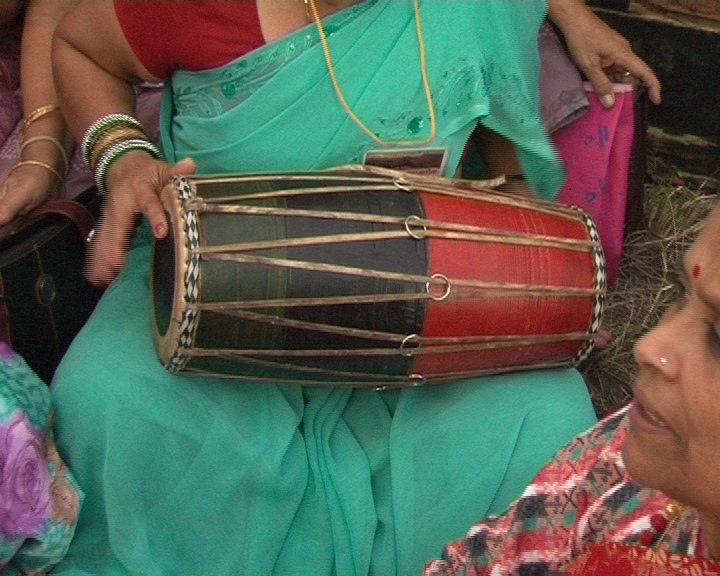
Krish Dulal · CC BY-SA 3.0 Madal
A small two-headed drum held across the lap, each head with a black tuning paste, one tuned high and one low. It is the drum of Nepal's folk songs and of every village festival, and the first instrument most Nepali children hear played in person.
Idiophone
Idiophone 14 Instrumente-
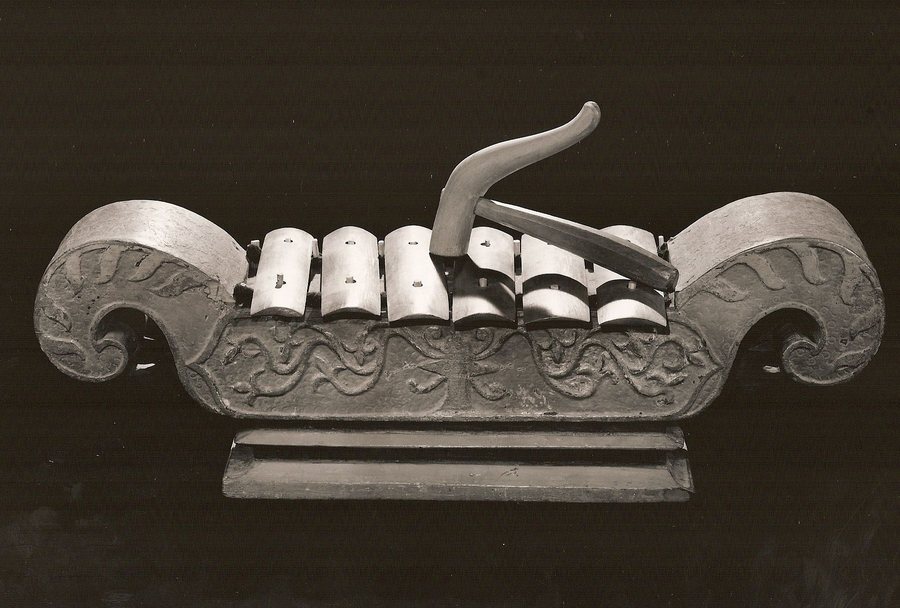
The Metropolitan Museum of Art · CC0 Gamelan
Not one instrument but an orchestra of bronze: tuned metallophones, hanging gongs, gong-chimes, drums and sometimes flutes and voices, all cast and tuned to each other, so an instrument is never moved from its set. Java's is slow and grand, Bali's fast and glittering, and the pairs of keys are tuned slightly apart so the sound shimmers.
-
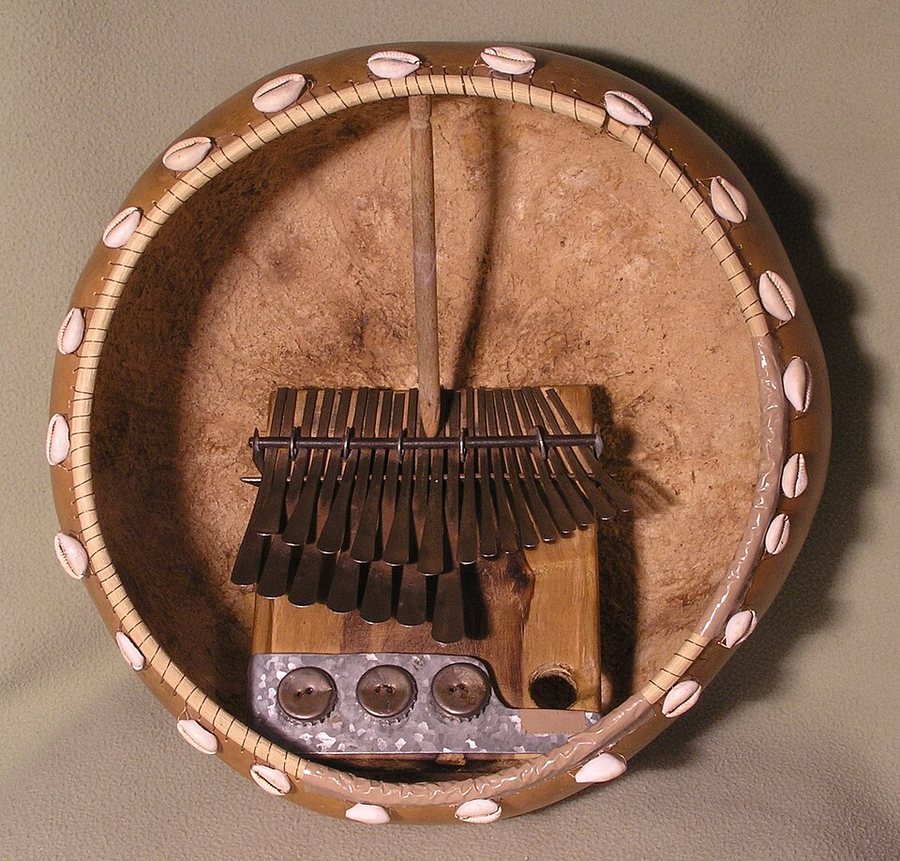
Alex Weeks · CC BY-SA 3.0 Mbira
Metal keys on a wooden board, plucked with the thumbs and a forefinger, often set inside a calabash with bottle caps that buzz. The mbira dzavadzimu of the Shona is played all night to call the ancestors at a bira ceremony, and in the 1970s Thomas Mapfumo transferred its lines to electric guitars.
-
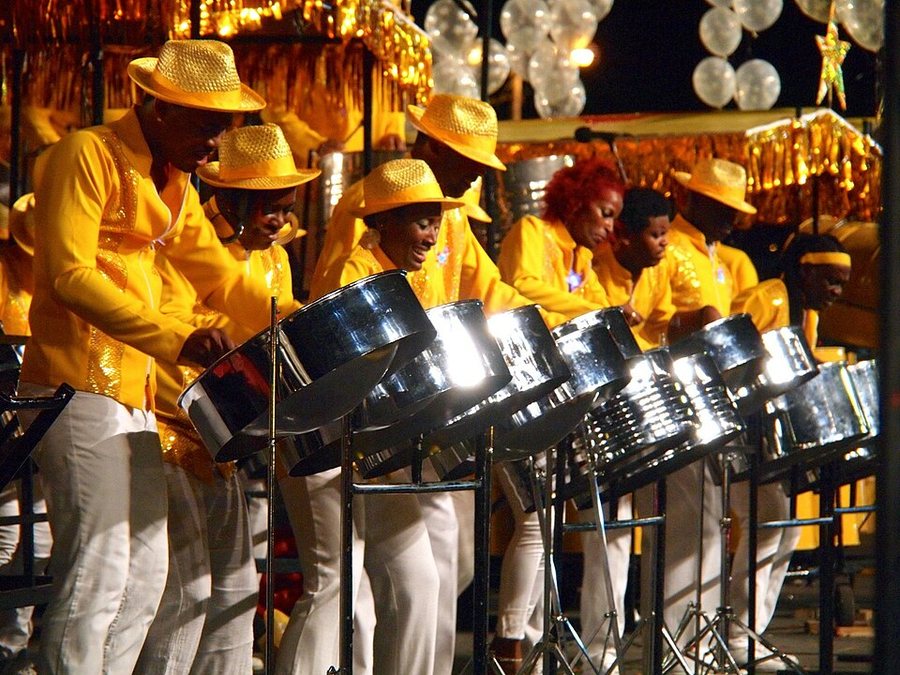
Kip1234 · CC BY-SA 4.0 Steelpan
An oil drum, its top hammered into a bowl and then dented into tuned notes. It was invented in Port of Spain in the 1930s and 40s after the colonial government banned drums, and is the only acoustic instrument invented in the twentieth century. A steel orchestra has a hundred players.
-
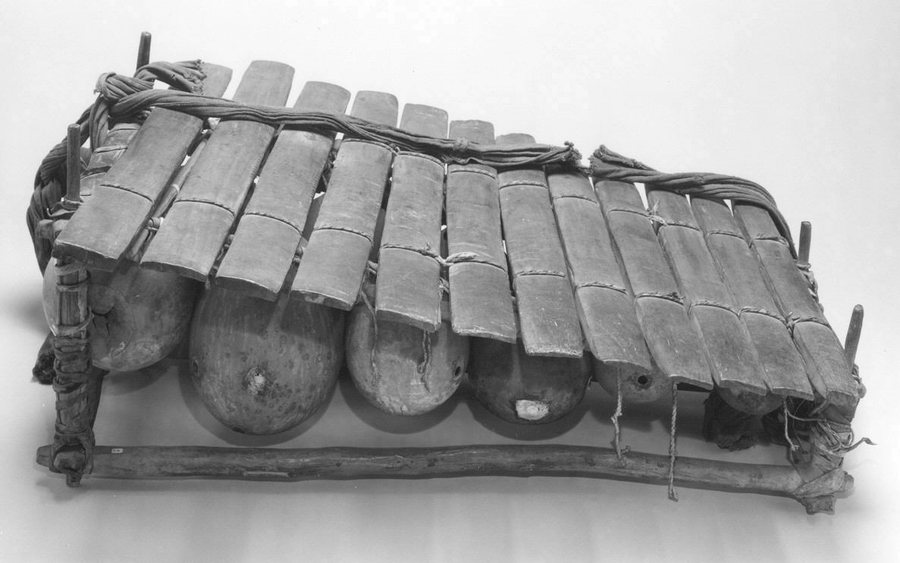
The Metropolitan Museum of Art · CC0 Balafon
A xylophone of hardwood keys over a frame, each with a calabash resonator fitted with a membrane of spider egg-sac that buzzes. The Sosso Bala in Guinea is held to be the original balafon, eight hundred years old, and one family is permitted to play it.
-
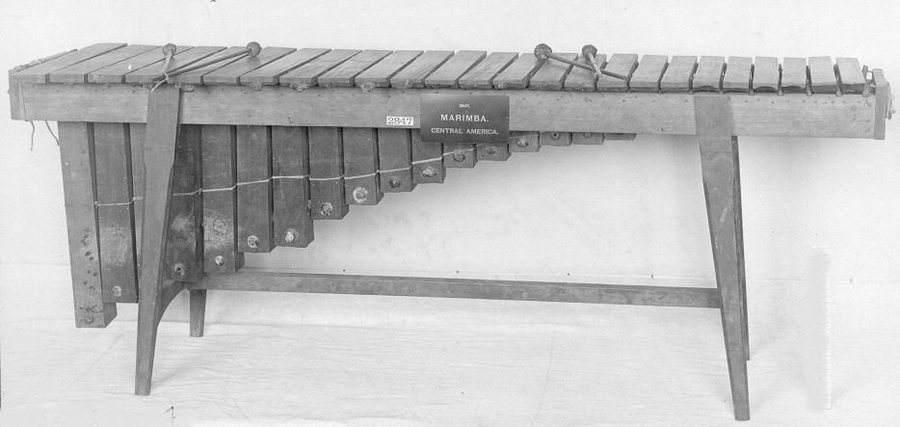
The Metropolitan Museum of Art · CC0 A xylophone with wooden resonators, descended from African balafons brought by enslaved people and rebuilt in Central America and on Colombia's Pacific coast. In Guatemala it is the national instrument, with several players to one long marimba; on the Colombian coast it leads the currulao.
-
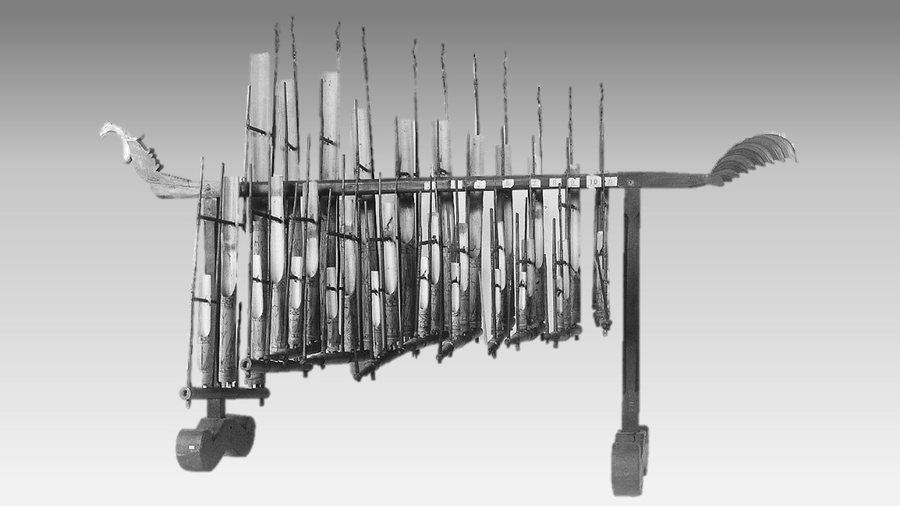
The Metropolitan Museum of Art · CC0 Angklung
Bamboo tubes in a frame that sound one note when shaken. Each player holds a note or two, so a melody needs a whole group, and that is the point: Sundanese children learn to play music as a team. UNESCO lists it; so did a Dutch colonial ban on it.
-
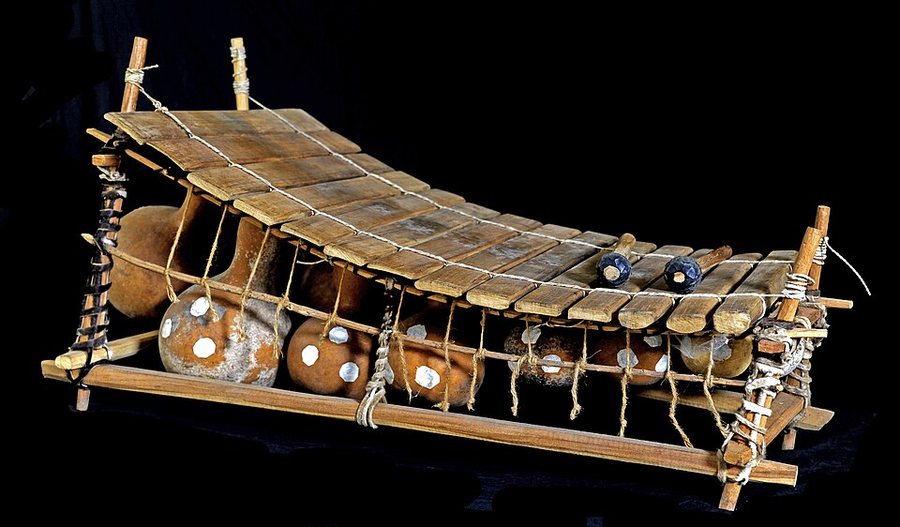
Dr clave · CC BY-SA 3.0 Gyil
The xylophone of the Dagara and Lobi peoples, fourteen keys of a wood called liga over gourds with spider-silk buzzers. It is played at funerals for days, two gyils with a drum, and the music it makes is said to be the dead person's life told again.
-
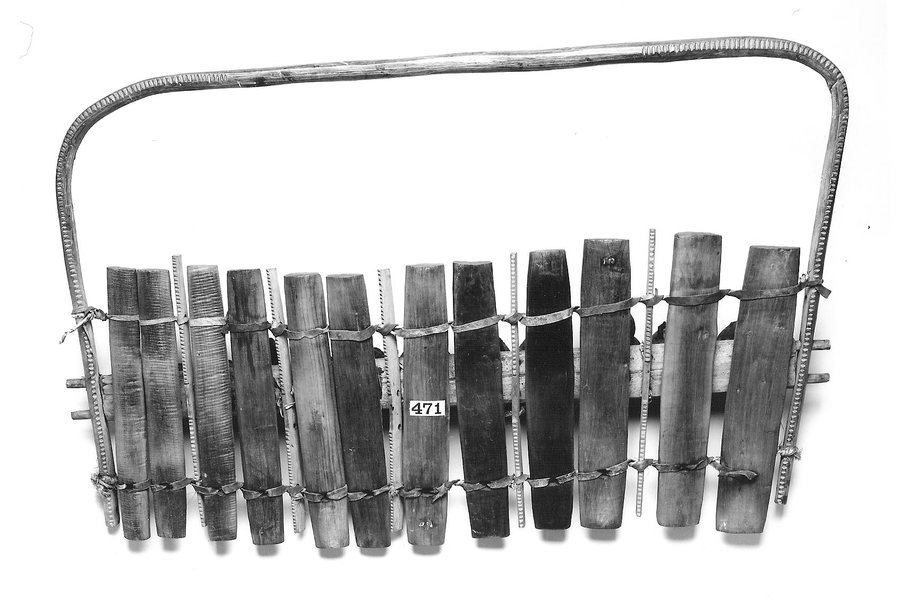
The Metropolitan Museum of Art · CC0 Timbila
The xylophones of the Chopi, with keys of sneezewood over resonators of a hard fruit shell. Orchestras of up to thirty players, in five sizes, perform composed suites with dancers and sung texts, and the music was the first in sub-Saharan Africa to be written down by an outsider, Hugh Tracey, in 1948.
-
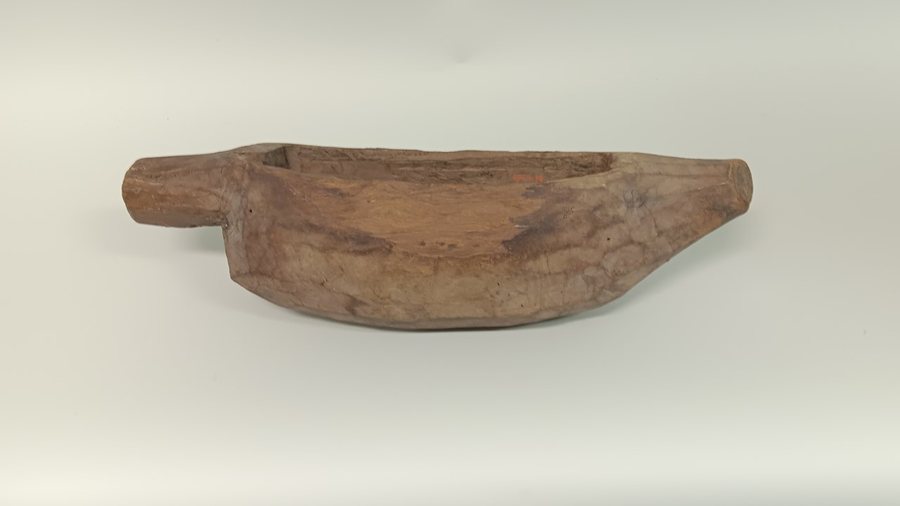
The Metropolitan Museum of Art · CC0 Slit drum
A log hollowed through a long slit so its two lips sound different notes when struck. Not a drum at all, since there is no skin. The carved standing tamtams of Vanuatu are as tall as a house; the Congolese lokole was tuned to the tones of speech and sent messages between villages.
-
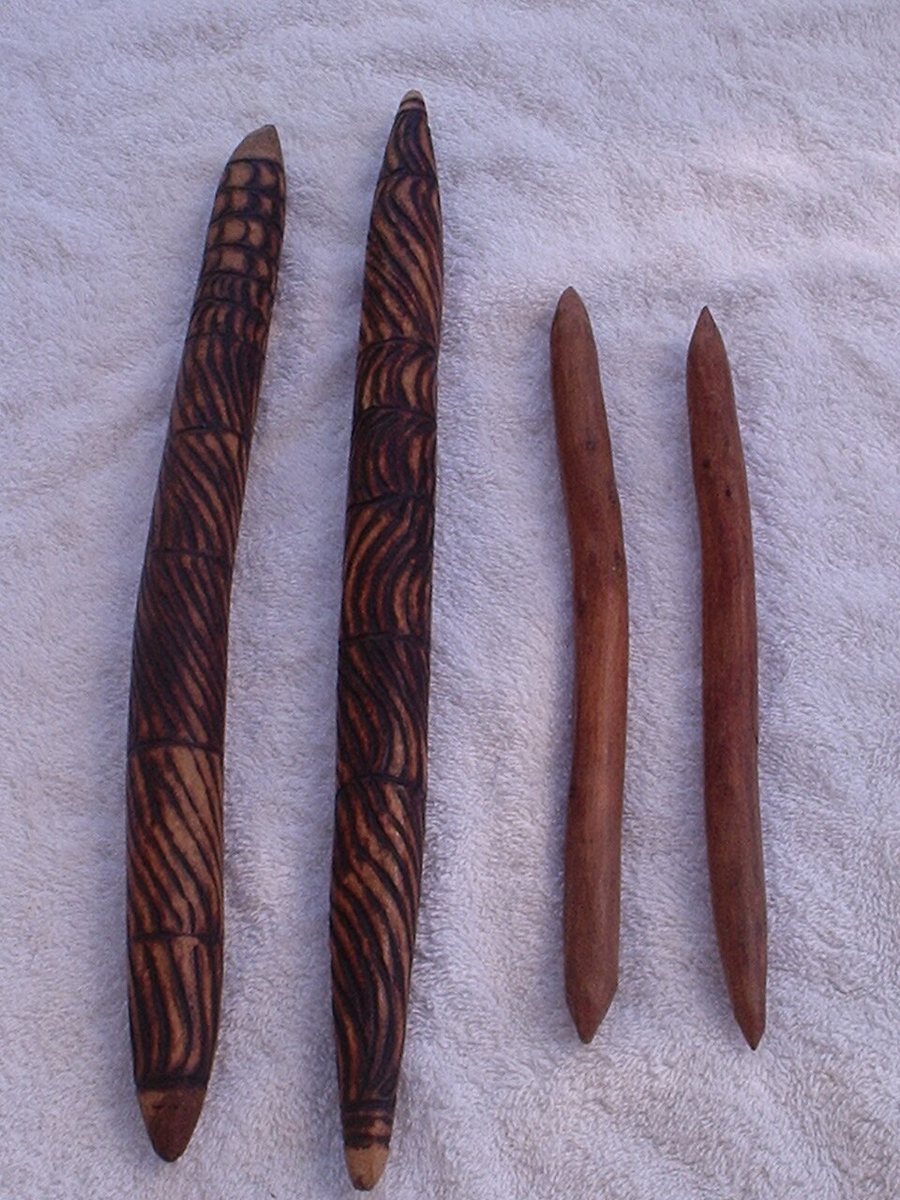
Andrewa · CC BY-SA 3.0 Clapsticks
A pair of hardwood sticks, struck together, often painted. Across Aboriginal Australia they are the instrument that carries song: in Arnhem Land the songman holds the bilma and the didgeridoo follows him, and a song cycle is counted in clapstick patterns.
-
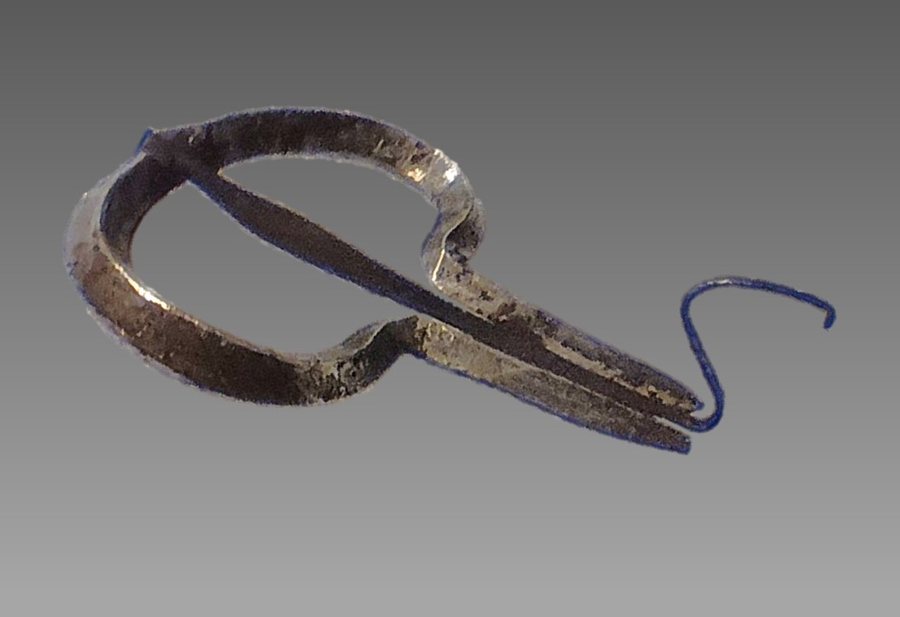
The Metropolitan Museum of Art · CC0 The jaw harp of the Sakha of Siberia: a forged iron frame with a flexible tongue, held to the teeth and plucked, with the mouth as the resonator. Where most jaw harps are toys, the Sakha built a virtuoso tradition of imitating birds, horses and the taiga.
-
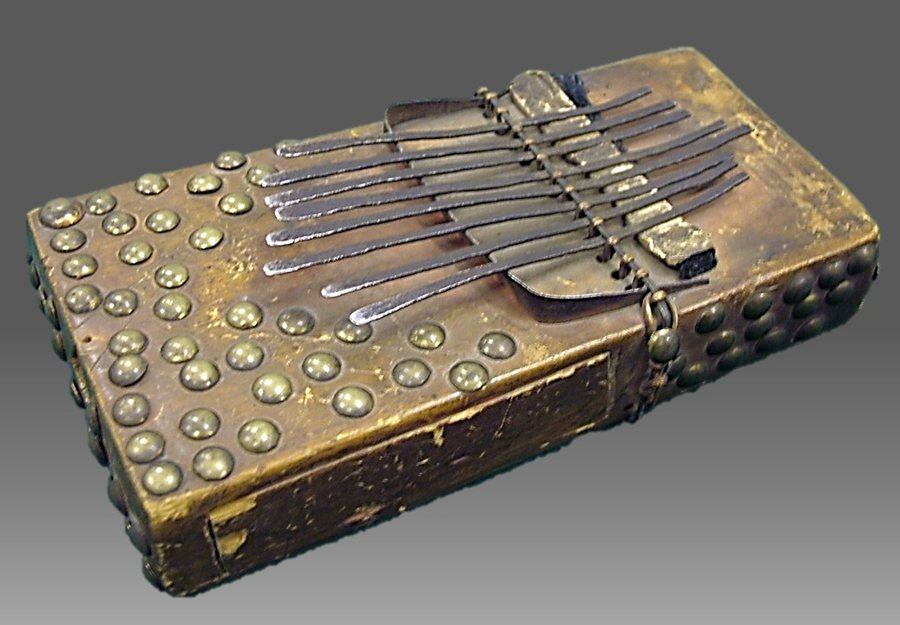
Bateke people · CC0 Likembe
The Congolese thumb piano, metal tongues on a box. Konono No. 1 of Kinshasa amplified theirs with microphones made from car parts and played them through megaphones, and the distorted result made its way to dance floors on every continent.
-
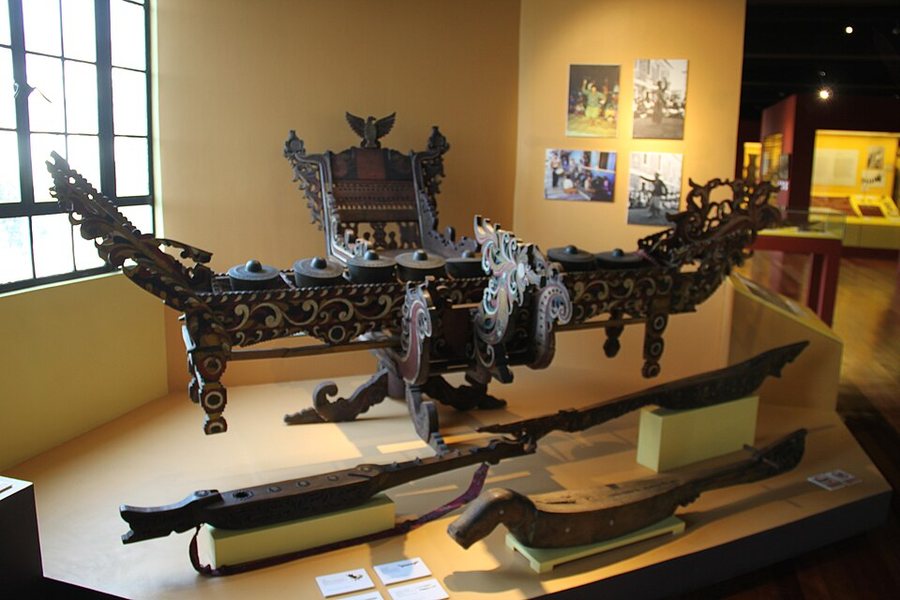
Gary Todd · CC0 Kulintang
A row of eight small bossed gongs laid on a frame and played with two sticks, with hanging gongs and a drum behind. It is the music of the Maguindanao and Maranao of the southern Philippines, older than Islam in the islands, and a cousin of the gamelan.
-
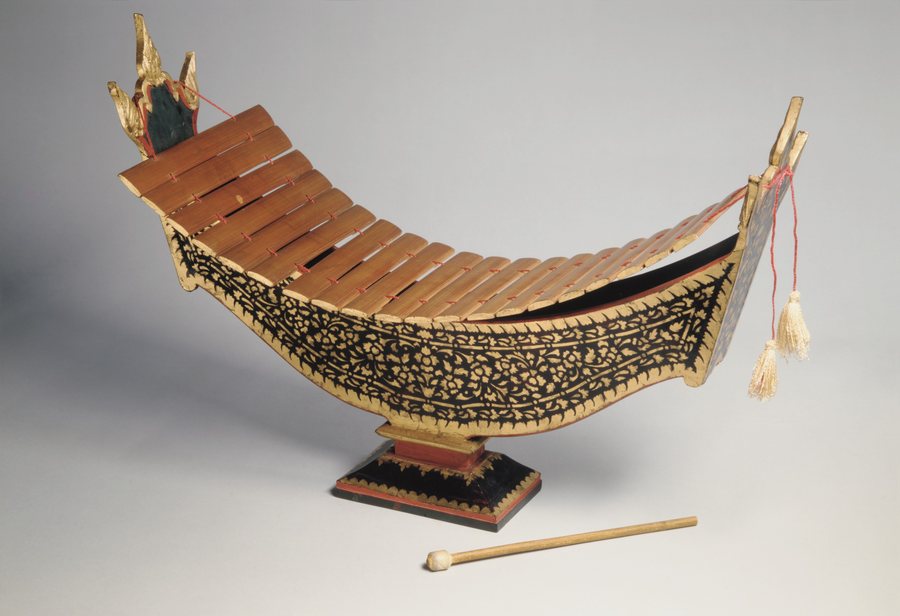
The Metropolitan Museum of Art · CC0 The Thai xylophone, a boat-shaped box with twenty-one or twenty-two bamboo or hardwood keys hung on cords. The ranat ek leads the piphat ensemble, playing in fast running octaves, and it is the instrument every Thai film about music has as its hero.